Trust Flow & Citation Flow Checker
Check Majestic Trust Flow, Citation Flow & referring domains
Our Trust Flow & Citation Flow checker is getting a data upgrade and will be back shortly. We’re moving to a more reliable link-quality source so the scores you see are accurate and free to use.
Trust Flow & Citation Flow Checker — Measure Your Link Quality
A Trust Flow & Citation Flow checker helps you understand the real quality of a website’s backlink profile — not just how many links it has, but how trustworthy those links are. Trust Flow and Citation Flow are two link metrics created by Majestic, each scored from 0 to 100. Together they tell you whether a site’s links come from reputable sources or from low-quality, spammy ones. This page explains what these scores mean, how to read them, and how to improve them.
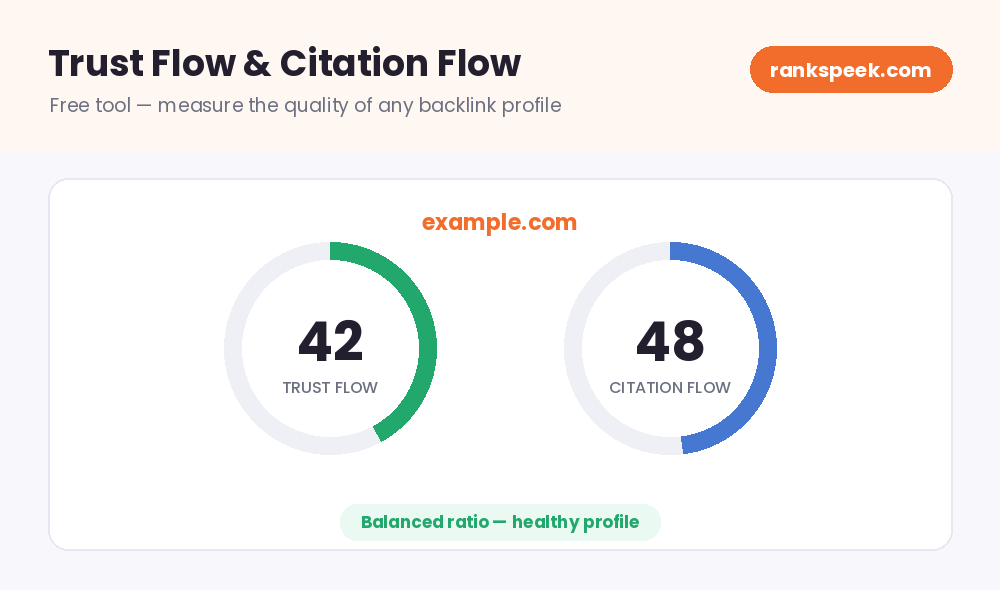
What Are Trust Flow and Citation Flow?
Trust Flow (TF) and Citation Flow (CF) are a pair of metrics from Majestic that measure two different sides of a website’s backlinks:
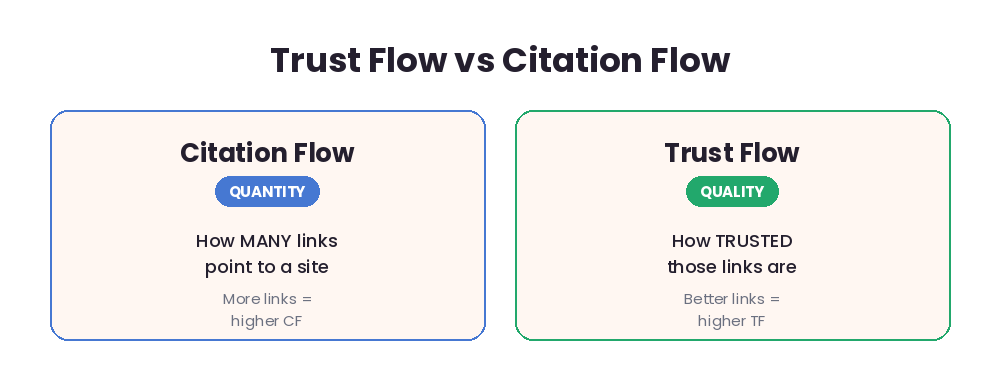
- Citation Flow (CF) measures the quantity of links pointing to a site. The more links a page has, the higher its Citation Flow — regardless of whether those links are good or bad.
- Trust Flow (TF) measures the quality of those links. It is based on how close a site’s backlinks are to a set of trusted, established "seed" websites. Links from reputable neighborhoods raise Trust Flow; links from spammy ones do not.
Both run on a 0–100 scale, where higher is stronger. A site can have a high Citation Flow but a low Trust Flow if it has many links that simply are not trustworthy.
Trust Flow vs Citation Flow: The Key Difference
The simplest way to remember it: Citation Flow is about quantity, Trust Flow is about quality. A page with thousands of links from random or spammy sites can score a high Citation Flow while its Trust Flow stays low. On the other hand, a page with fewer links from genuinely authoritative sites will have a healthier Trust Flow. Because quality links are harder to earn than just any link, Trust Flow is usually the more meaningful of the two for SEO.
How to Read Your TF and CF (the Ratio)
The relationship between the two scores tells you a lot. SEOs often look at the TF/CF ratio:
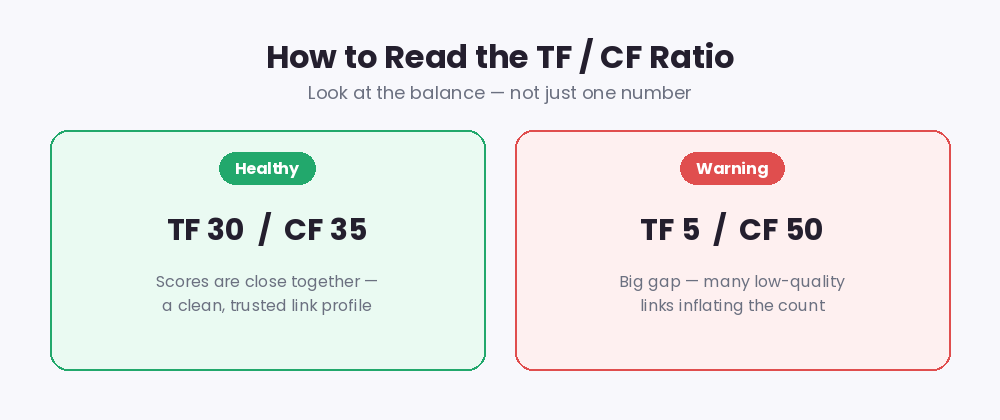
- A balanced ratio — where Trust Flow is close to Citation Flow — usually signals a clean, healthy backlink profile.
- A big gap — high Citation Flow but very low Trust Flow — often points to spammy or low-quality links inflating the count.
For example, a site with a Trust Flow of 30 and a Citation Flow of 35 looks healthier than a site with a Trust Flow of 5 and a Citation Flow of 50, even though the second site has more total links. When you check Trust Flow and Citation Flow, look at the balance, not just the individual numbers.
Why Trust Flow and Citation Flow Matter for SEO
Search engines reward sites that earn trustworthy, relevant links. That is exactly what Trust Flow tries to capture, which is why it lines up well with how modern SEO works. A strong Trust Flow suggests your links come from credible sources — the kind of signal that supports better rankings. Citation Flow, meanwhile, shows reach and popularity. Watching both over time helps you measure whether your link-building is adding real quality or just raw numbers.
How to Improve Your Trust Flow
Citation Flow is easy to grow — almost any link adds to it. Trust Flow is harder, and that is the point. Here is how to lift it:
- Earn links from trusted, relevant sites. A few links from respected sites in your niche beat hundreds from random ones.
- Stay in your topic. A link from a site in your own field carries more trust than an unrelated one.
- Avoid spammy link schemes. Cheap, bulk links can drag your Trust Flow down and even harm your rankings.
- Strengthen internal linking. Clear, relevant internal links help spread trust through your own pages.
- Publish content worth linking to. Genuinely useful pages naturally attract the high-quality links that build Trust Flow.
Trust Flow & Citation Flow in 2026
Link quality matters more than ever in 2026. Google continues to emphasize trustworthy, helpful content and credible sources, so the "quality" signal that Trust Flow measures is closely aligned with what search engines reward today. Smart SEOs no longer chase raw link counts; they focus on earning fewer, better links from sites people actually trust. Used alongside metrics like Domain Authority and spam score, Trust Flow and Citation Flow give you a fuller picture of a backlink profile’s real health.
Tips for Using TF and CF Wisely
- Compare the TF/CF ratio, not just one number on its own.
- Treat a high Citation Flow with a very low Trust Flow as a warning sign.
- Always weigh these scores next to relevance and spam score before chasing a link.
- Remember these are third-party estimates from Majestic, not figures from Google.
Related Free SEO Tools on RanksPeek
Use these other free tools to check a domain’s authority and link health — just click any button to open it:
Helpful resource: To learn how these metrics are defined by their creator, visit Majestic, the creator of Trust Flow & Citation Flow →
Frequently Asked Questions
What is the difference between Trust Flow and Citation Flow?
Citation Flow measures how many links point to a site, while Trust Flow measures how trustworthy those links are. In short: Citation Flow is quantity, Trust Flow is quality.
What is a good Trust Flow score?
There is no single "good" number — it depends on your niche. What matters most is that your Trust Flow is reasonably close to your Citation Flow, which signals a healthy link profile.
Are Trust Flow and Citation Flow Google metrics?
No. They were created by Majestic, a third-party SEO company. Google does not use them directly, but they are a helpful guide to link quality.
Why is my Citation Flow higher than my Trust Flow?
This is common, because links are easy to gain but trusted links are harder to earn. A large gap, though, can mean too many low-quality links are inflating your Citation Flow.
How can I raise my Trust Flow?
Earn links from trusted, relevant websites, avoid spammy link schemes, and publish content good enough that credible sites want to link to it.
Understanding Trust Flow and Citation Flow is the first step to building a backlink profile that search engines trust.
From our Blog
 AI Schema Markup Generator: How to Use It SafelyAn AI Schema Markup Generator takes a page you already have and writes the structured data code for it, so sea…
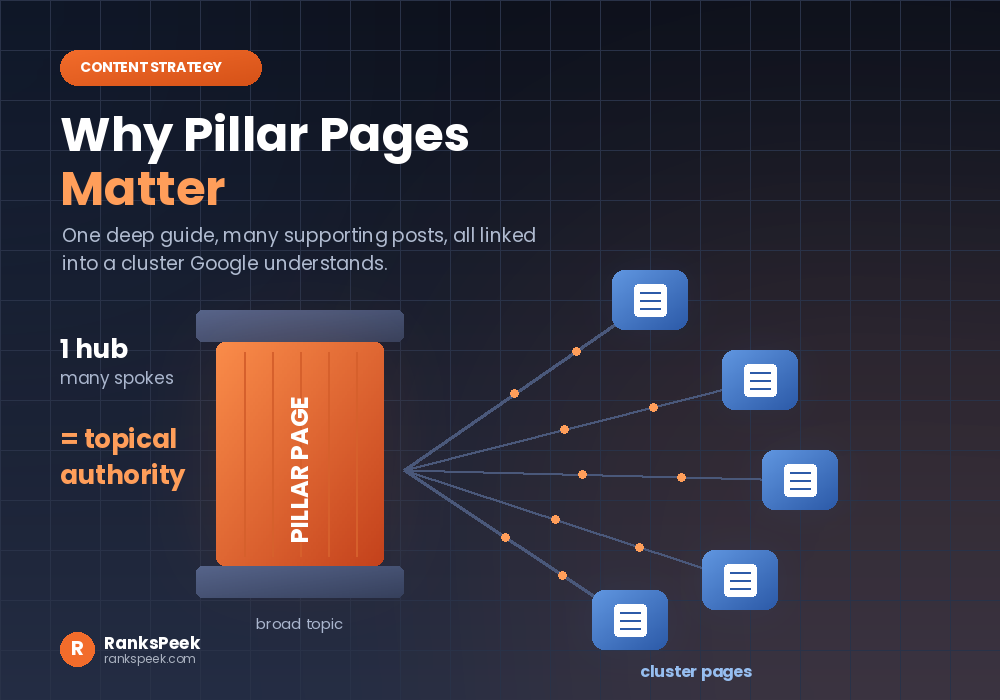 Why Pillar Pages Matter: The SEO Case for Topic ClustersWhy Pillar Pages Matter comes down to one idea: Google rewards depth, and a pillar page is how you prove it. A…
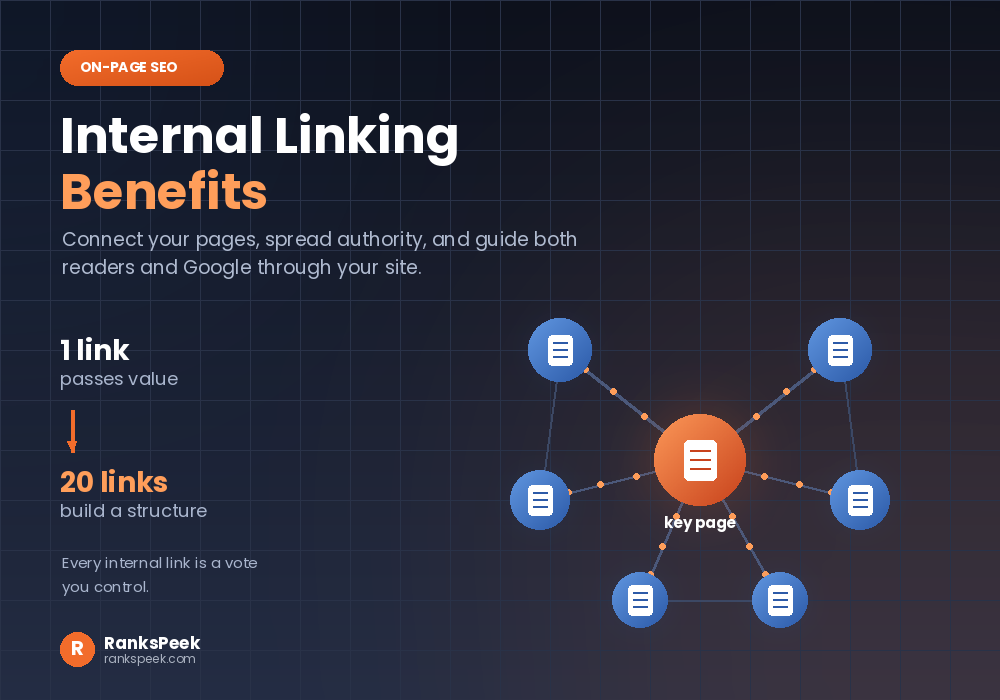 Internal Linking Benefits: Why They Matter for SEOInternal Linking Benefits are some of the easiest wins in all of SEO, because they cost nothing and you contro…