Keyword Density Checker
Enter a URL or paste your text
Free Keyword Density Checker Tool — Analyze Any Page’s Keywords
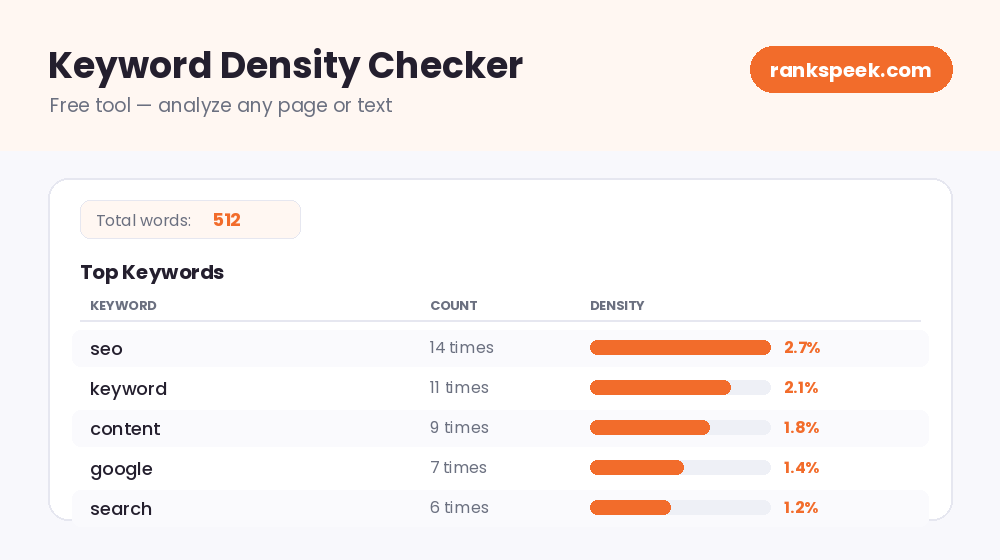
A free keyword density checker tool analyzes how often each keyword appears on a web page compared to the total word count — the same way a search engine reads your content. You enter a URL or paste your text, and the tool shows you the top keywords and their density percentages. This helps you write balanced, natural content that is not stuffed with keywords, which is exactly what search engines reward today.
Keyword density is the percentage of times a keyword appears on a page compared to its total number of words. For example, if a keyword appears 5 times in a 500-word article, its density is 1%. There is no perfect number — the goal is natural writing, not a fixed percentage. A keyword density checker shows these percentages so you can avoid over-using (stuffing) any word.
What Is a Keyword Density Checker?
A keyword density checker is a tool that scans a page or block of text and counts how often each word and phrase appears, then shows it as a percentage of the total. Instead of counting by hand, you get an instant breakdown of your most-used keywords. It is useful for spotting when you have accidentally repeated a term too many times, and for checking that your main keyword actually appears often enough to be clear.
How Keyword Density Is Calculated
The formula is simple: divide the number of times a keyword appears by the total number of words, then multiply by 100 to get a percentage.
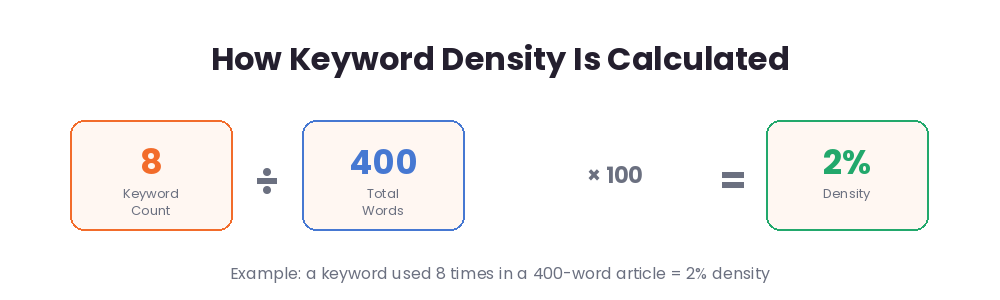
For example, a keyword used 8 times in a 400-word article works out to (8 ÷ 400) × 100 = 2% density. Good tools also break this down by phrase length — single words, two-word phrases, and three-word phrases — because your main target is often a phrase, not just one word.
Why Keyword Density Matters for SEO
Keyword density is not a magic ranking number, but it still matters for two reasons:
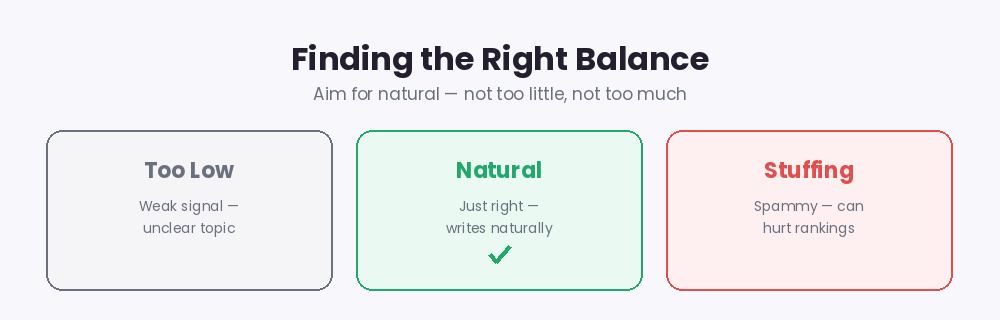
- Too high looks like spam. Repeating a keyword unnaturally is "keyword stuffing," which violates Google’s guidelines and can hurt your rankings.
- Too low sends weak signals. If your target keyword barely appears, it is harder for search engines and readers to tell what the page is about.
The sweet spot is natural: write for humans first, mention your keyword where it genuinely fits, and use a density check afterward to make sure you did not overdo it.
What Our Keyword Density Checker Shows
Enter a URL or paste text, and the tool gives you a clear breakdown:
- Top keywords — the words and phrases used most on the page.
- Frequency count — how many times each one appears.
- Density percentage — each keyword’s share of the total word count.
- Phrase grouping — single words and two-word phrases, so you can check your exact target phrase.
This makes it easy to see at a glance whether any keyword is over- or under-used.
How to Use the Free Keyword Density Checker
You do not need any technical skill:
- Step 1 — Add your content. Enter a page URL, or paste your text directly.
- Step 2 — Check. Click the button to analyze the content.
- Step 3 — Read the results. Review the top keywords and their density percentages.
- Step 4 — Adjust if needed. Trim over-used words, or work your main keyword in more naturally where it is too thin.
Is There an Ideal Keyword Density?
This is the most common question — and the honest answer is no fixed number. Google has never published an ideal percentage, and chasing one is a mistake. Older advice suggested figures like 1–2%, but modern SEO focuses on natural writing and relevance instead. Rather than hitting a target percentage, use the checker to make sure no keyword is repeated so often that it reads unnaturally. If a word jumps out as unusually high, that is your cue to reword.
Keyword Density in 2026
Search engines are far more sophisticated in 2026 than in the days when keyword counting ruled SEO. Google now understands topics, synonyms, and context, so it recognizes what your page is about without you repeating the exact keyword over and over. That makes keyword stuffing not just useless but risky. As AI-generated overviews pull answers from genuinely helpful content, the winning approach is clear, natural writing that covers a topic well. Use keyword density as a safety check against over-optimization — not as a target to hit.
Tips for Healthy Keyword Use
- Write naturally first, then check density afterward — never the other way around.
- Use synonyms and related phrases instead of repeating one exact keyword.
- Place your main keyword in the title, first paragraph, and a heading — naturally.
- If a keyword feels repetitive when you read aloud, it probably is.
- Focus on covering the topic fully rather than hitting a percentage.
Related Free SEO Tools on RanksPeek
Use these other free tools to research and refine your keywords — just click any button to open it:
Helpful resource: To read Google’s stance on keyword stuffing, see the Google Search Central documentation →
Frequently Asked Questions
What is a good keyword density?
There is no official ideal number. Instead of targeting a percentage, aim for natural writing and use the checker to make sure no keyword is over-used.
What is keyword stuffing?
Keyword stuffing means repeating a keyword unnaturally to try to manipulate rankings. It violates Google’s guidelines and can lower your rankings, so it is best avoided.
Can I check a competitor’s page?
Yes. Enter any public URL to see which keywords a competitor’s page emphasizes — useful for understanding their focus.
Does keyword density directly affect ranking?
Not directly. Google has never confirmed an ideal density. What matters is relevant, natural content — density is mainly a check against over-optimization.
Can I analyze text that is not published yet?
Yes. You can paste your draft text into the tool to check its density before publishing.
Paste your content or a URL above and make sure your keywords are balanced, natural, and search-friendly.
From our Blog
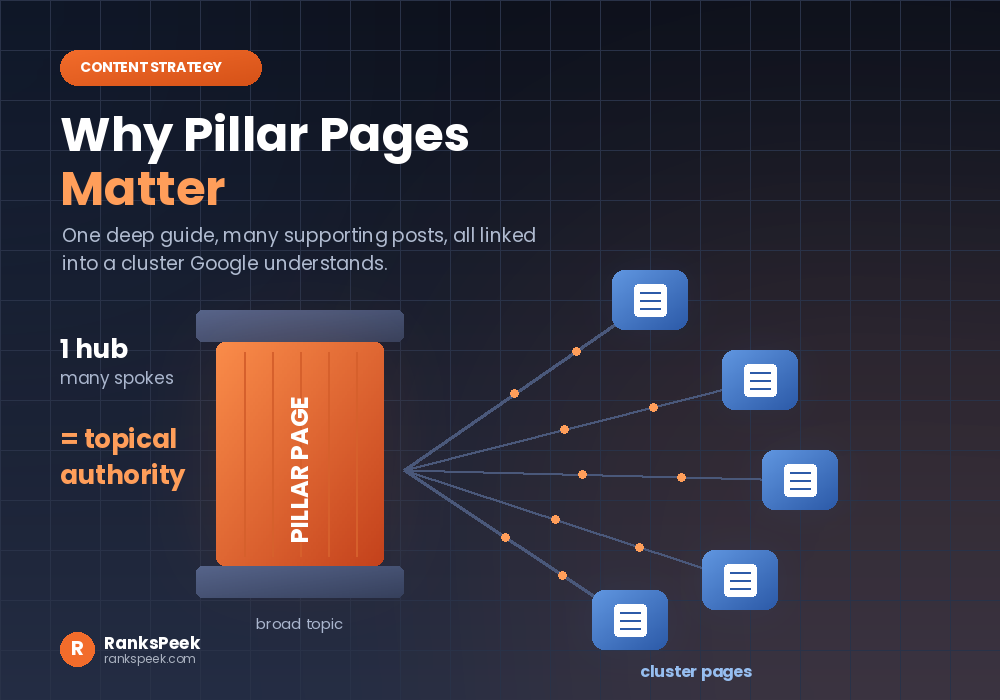 Why Pillar Pages Matter: The SEO Case for Topic ClustersWhy Pillar Pages Matter comes down to one idea: Google rewards depth, and a pillar page is how you prove it. A…
 AI Agent Readiness: Prepare Your Website for AI AgentsAI Agent Readiness is the work of preparing your website so AI agents can read it, understand it, and act on i…
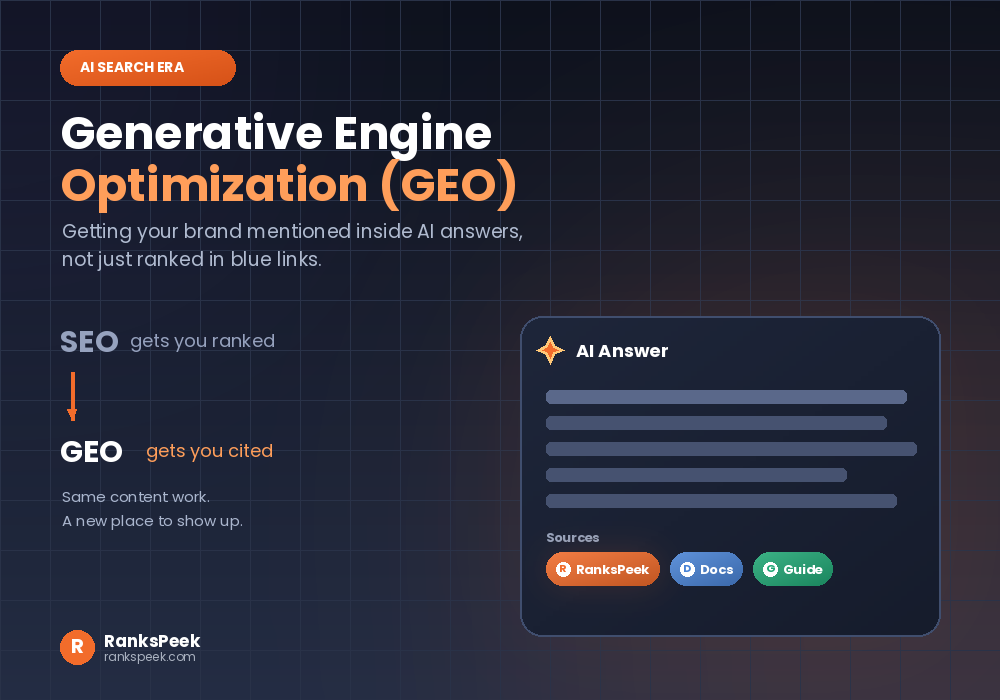 Generative Engine Optimization (GEO): Definition and How to Do ItGenerative Engine Optimization GEO Definition is easier than the name suggests. GEO is the practice of getting…