Spam Score Checker
Check a domain's spam score and risk level
Free Spam Score Checker Tool — Check Any Domain’s Spam Risk
A free spam score checker tool helps you measure how risky a website’s backlink profile looks in the eyes of search engines. Spam Score is a metric created by Moz that estimates the likelihood a site looks spammy, shown as a percentage from 1% to 100%. A low score is healthy; a high score is a warning sign. With our free spam score checker, you can check any domain in seconds — your own site or a link prospect — and avoid the toxic links that can drag your rankings down.
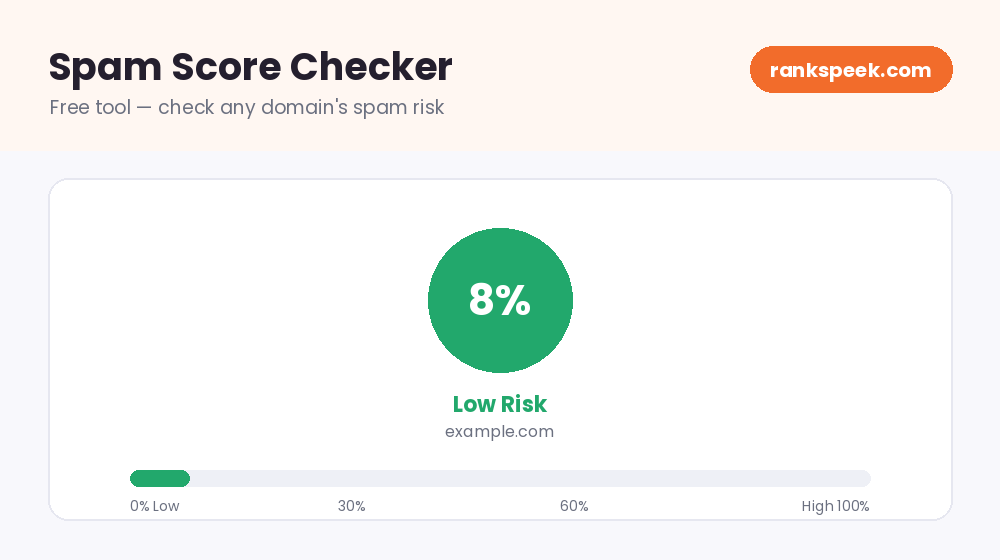
Spam Score is a metric by Moz that predicts how likely a website is to be seen as spammy by search engines, based on a range of "spam flags" found on penalized sites. It is shown as a percentage from 1% to 100% — the lower the better. A high Spam Score does not prove a site is spam, but it is a strong warning to look closer before trusting or linking to it.
What Is a Spam Score Checker?
A spam score checker is a tool that looks up a domain’s Moz Spam Score and shows it to you instantly. Moz built this metric by studying many websites that search engines had penalized, and finding the common warning signs — called "spam flags" — that those sites shared. The more flags a site triggers, the higher its Spam Score. A checker saves you from digging through data manually: you enter a domain and get its risk level right away.
How to Read Your Spam Score
Spam Score is shown as a percentage and usually grouped into three risk levels:
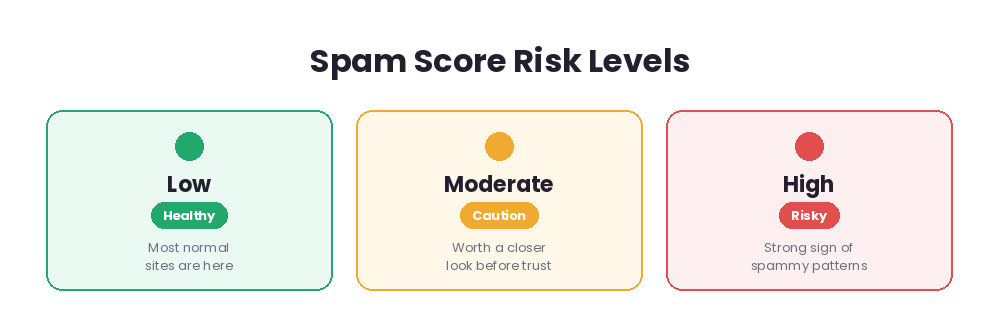
- Low (healthy) — a small percentage, typically considered safe. Most normal sites fall here.
- Moderate — a mid-range score worth a closer look before you trust or link to the site.
- High (risky) — a large percentage that signals a strong chance of spammy patterns.
Remember that Spam Score is a probability, not a verdict. A high score does not guarantee a site is spam, and a few flags are normal — almost every site triggers at least one. Use it as an early warning, then judge the site with your own eyes too.
Why Spam Score Matters for SEO
Search engines reward trustworthy links and can discount or penalize manipulative ones. Spam Score helps you stay on the safe side:
- Protect your own site — check which risky sites link to you, so you can spot a toxic backlink problem early.
- Vet link prospects — before you request a backlink or guest post, check the site’s Spam Score to avoid harmful links.
- Clean up your profile — sort your backlinks by risk to find the worst offenders quickly.
- Audit competitors — see whether a rival’s links look clean or risky.
How to Use Our Free Spam Score Checker
You do not need any technical skill:
- Step 1 — Enter a domain. Type the website you want to check into the box above.
- Step 2 — Run the check. Click the button and the tool looks up the site’s Spam Score.
- Step 3 — Read the result. See the score and its risk level at a glance.
- Step 4 — Act on it. Decide whether the site is safe to link with, or needs a closer look.
What Raises a Site’s Spam Score?
Moz’s spam flags cover a wide range of signals tied to low-quality or manipulative sites. Common patterns that can push a score higher include:
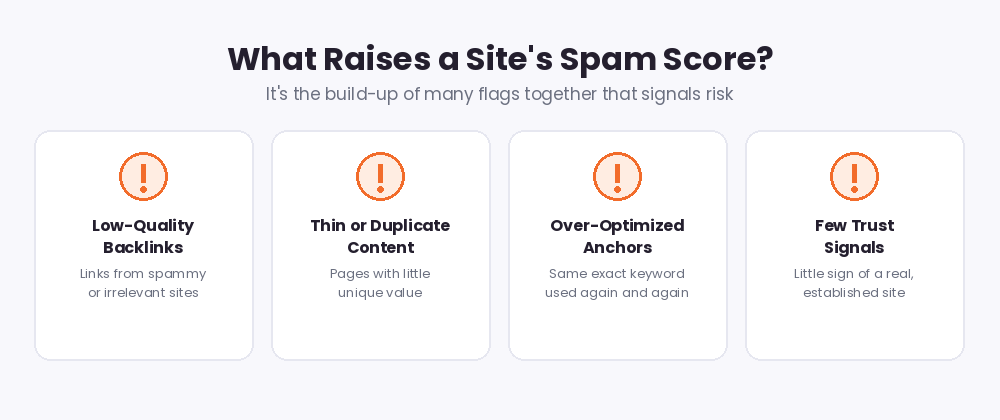
- Low-quality backlinks — links from spammy or irrelevant sites.
- Thin or duplicate content — pages that add little unique value.
- Over-optimized anchor text — the same exact-match keyword used in links again and again.
- Few trust signals — little sign of a real, established, trusted website.
No single flag is a problem on its own — it is the build-up of many flags together that signals real risk.
How to Lower a High Spam Score
If your site shows a worrying score, you can improve it over time:
- Audit your backlinks and identify the low-quality, irrelevant ones.
- Remove or disavow the worst toxic links — but do this carefully, since disavowing good links by mistake can hurt you.
- Publish original, helpful content to strengthen your site’s quality signals.
- Avoid black-hat shortcuts like buying links or keyword stuffing.
- Re-check regularly to catch new spammy links pointing at your site early.
Spam Score in 2026
Link quality matters more than ever in 2026. Search engines have become better at ignoring or penalizing manipulative links, and they increasingly reward genuinely trustworthy sites. That makes a quick spam check a smart habit before building any link. Keep in mind that Spam Score is a third-party estimate from Moz, not a Google metric — so use it as one helpful signal among several, alongside relevance, authority, and your own judgment.
Tips for Using Spam Score Wisely
- Do not panic over a low or moderate score — some flags are completely normal.
- Always weigh Spam Score next to relevance and real site quality.
- Pair it with authority metrics like DA and PA for a fuller picture.
- Use it as a filter to shortlist safe links, not as the only deciding factor.
Related Free SEO Tools on RanksPeek
Use these other free tools to check a domain’s authority and link health — just click any button to open it:
Helpful resource: To learn how this metric is defined by its creator, visit Moz, the creator of Spam Score →
Frequently Asked Questions
What is a good Spam Score?
A low Spam Score is best. Lower percentages are generally considered healthy, while higher percentages signal more risk. There is no single perfect number — compare within context.
Is Spam Score a Google metric?
No. Spam Score was created by Moz, a third-party SEO company. Google does not use it directly, but it is a useful guide to link risk.
Does a high Spam Score mean my site is penalized?
No. It means the site shows patterns common to spammy sites — a warning to investigate, not proof of a penalty.
Can I lower my Spam Score?
Yes. Auditing and disavowing toxic backlinks, improving content quality, and avoiding manipulative tactics can lower it over time.
Should I disavow links from high Spam Score sites?
Only after careful review. Disavow clearly toxic, irrelevant links — but be cautious, as removing good links by mistake can harm your rankings.
Check any domain’s Spam Score above and keep your backlink profile clean and safe.
From our Blog
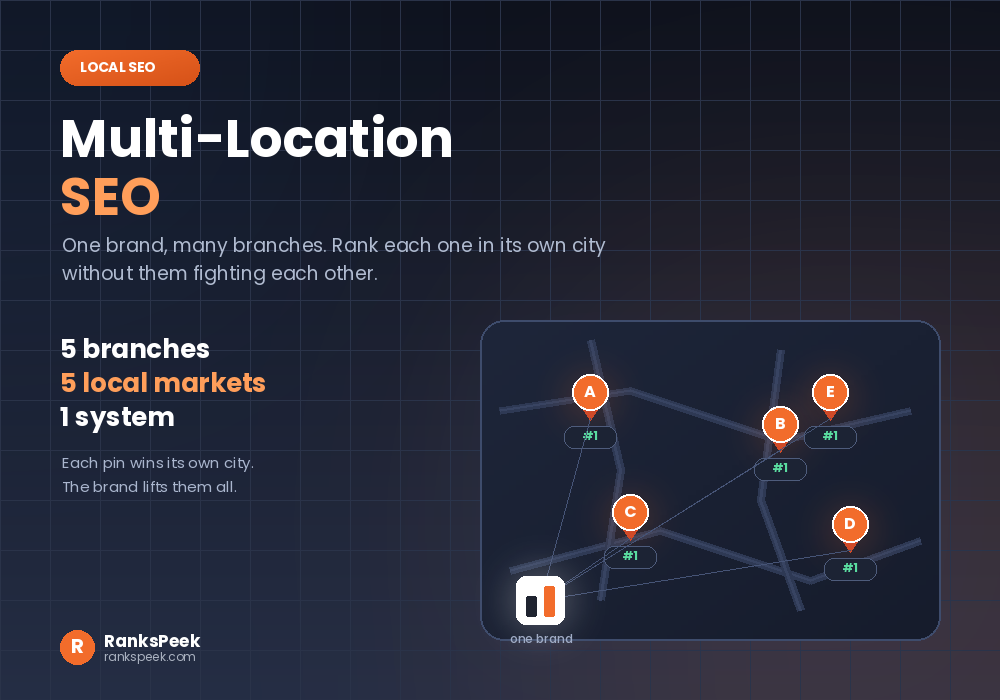 Multi-Location SEO: Rank Every Branch in Its Own CityMulti-location SEO is what local SEO turns into once a business has more than one branch. One shop means one G…
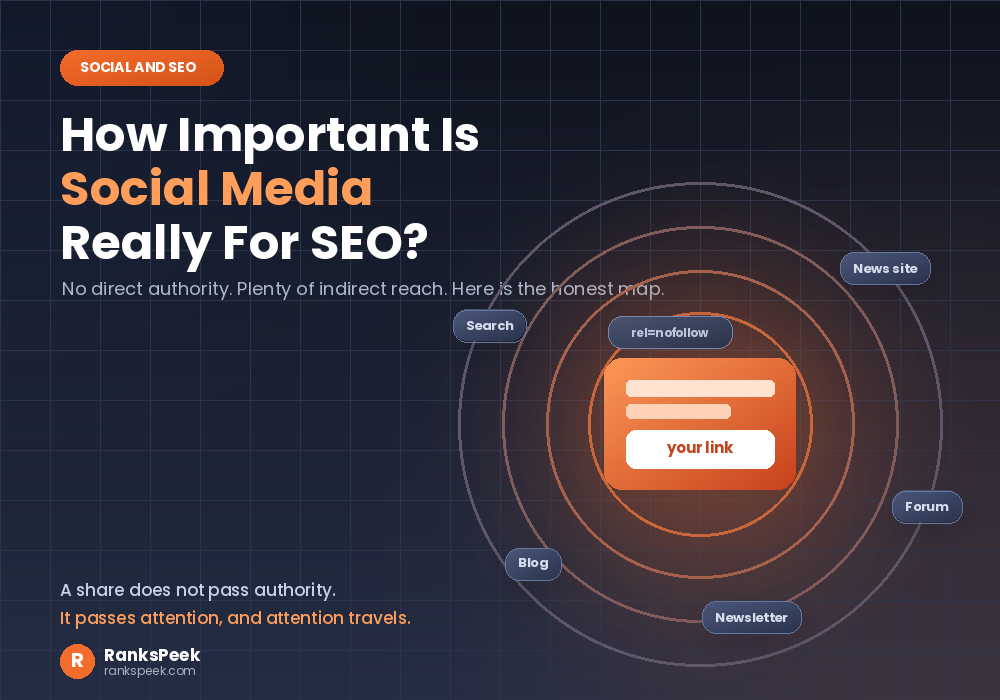 How Important Social Media Really Is For SEO (Honest Answer)How important social media really is for SEO is a fair question, and the honest answer annoys both sides of th…
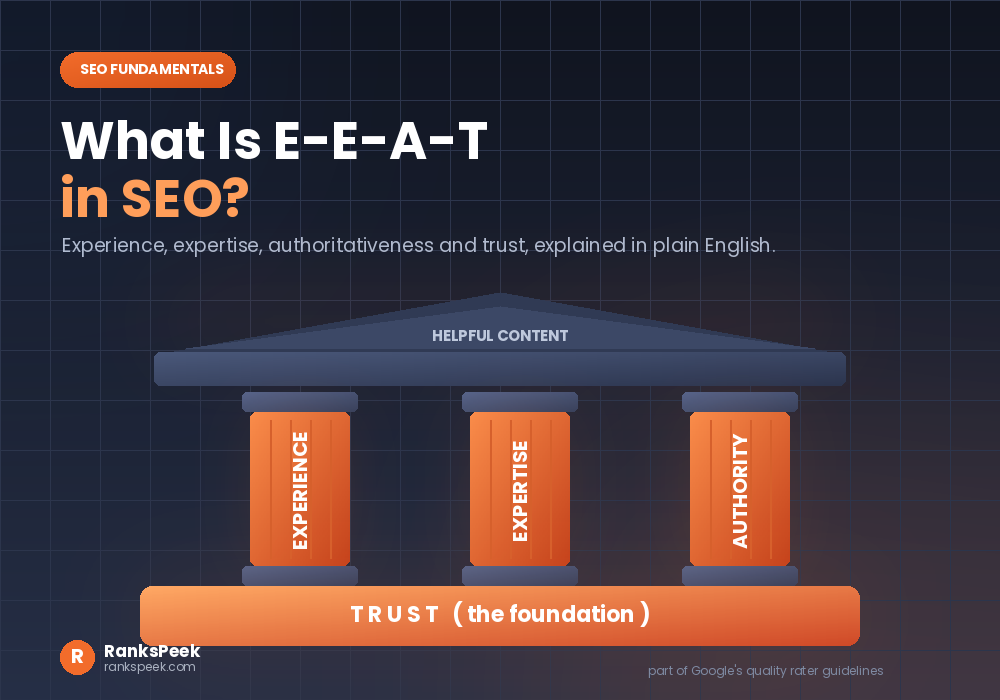 What Is E-E-A-T in SEO? Meaning and How to ImproveWhat is E-E-A-T in SEO is one of the first questions people ask when a page refuses to rank. So here is the pl…