Every year, someone declares SEO dead. This year, the panic feels louder, because AI answers now sit on top of the search results. So, is SEO dead or evolving in 2026? The short answer: evolving, and faster than ever. In this article, you will see what actually changed, what still works, and exactly how to adapt your strategy without wasting effort.
SEO is not dead in 2026, it is evolving. People still search Google billions of times daily, and most AI answers pull from well optimized pages. What died is lazy SEO: thin content, keyword stuffing, and cheap links. What works now is helpful content, strong technical basics, real expertise, and visibility across search engines, AI answers, and social platforms together.
Why Everyone Keeps Asking If SEO Is Dead
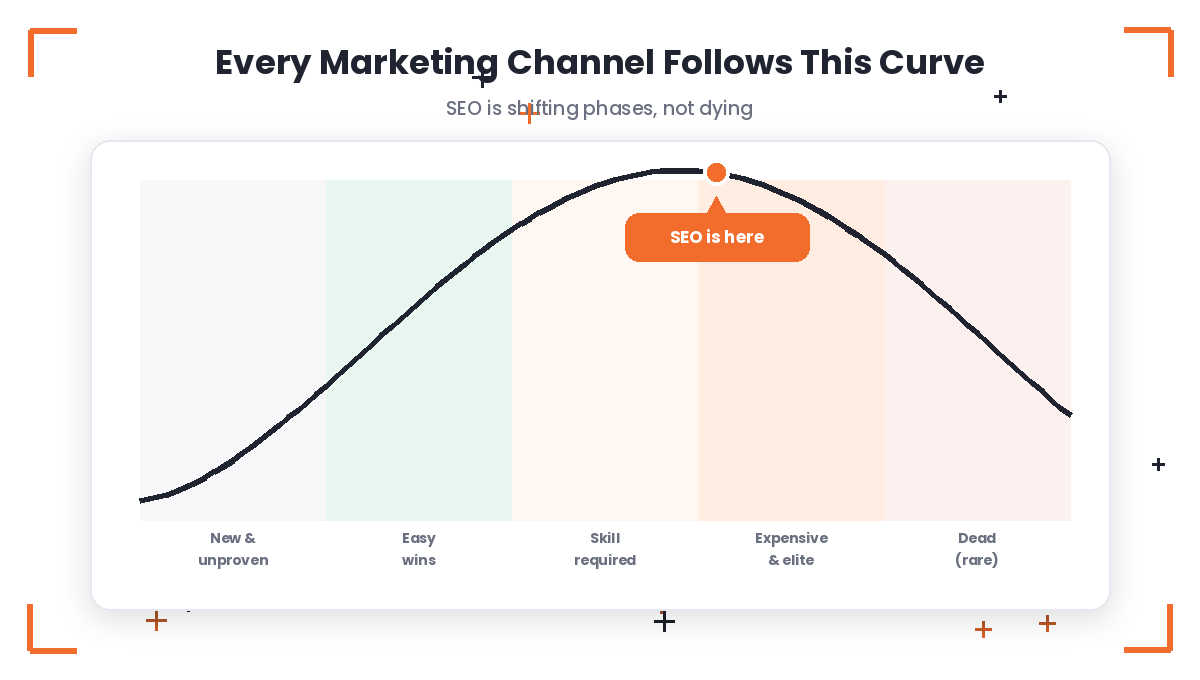
Marketing channels follow a lifecycle. First, a channel is new and unproven. Then early adopters get easy wins. Later, competition makes it fairly priced: it works, but it needs skill. Eventually, some channels become overpriced, and a rare few truly die.
SEO sits in the middle of that curve, sliding from easy toward demanding. The simple recipe from ten years ago, write a post, add keywords, get a few links, no longer guarantees results. Consequently, people who relied on that recipe feel the ground shifting. Their frustration fuels the “SEO is dead” headlines every single year.
What Actually Changed: AI Answers and Zero-Click Search
Google has trimmed clicks for over a decade. Knowledge panels answered facts. Featured snippets answered questions. People Also Ask boxes handled follow-ups. AI Overviews are simply the biggest step in that same direction, because they answer a much wider range of questions right on the results page.
However, here is the twist most panic posts skip. AI Overviews do not invent answers from nowhere. They cite sources, and those sources are mostly well structured, helpful pages, the exact kind good SEO produces. Google’s own documentation on AI features confirms it: the same fundamentals decide who appears there. So the target moved, but the skills to hit it stayed familiar.
Search Went Everywhere, Not Away
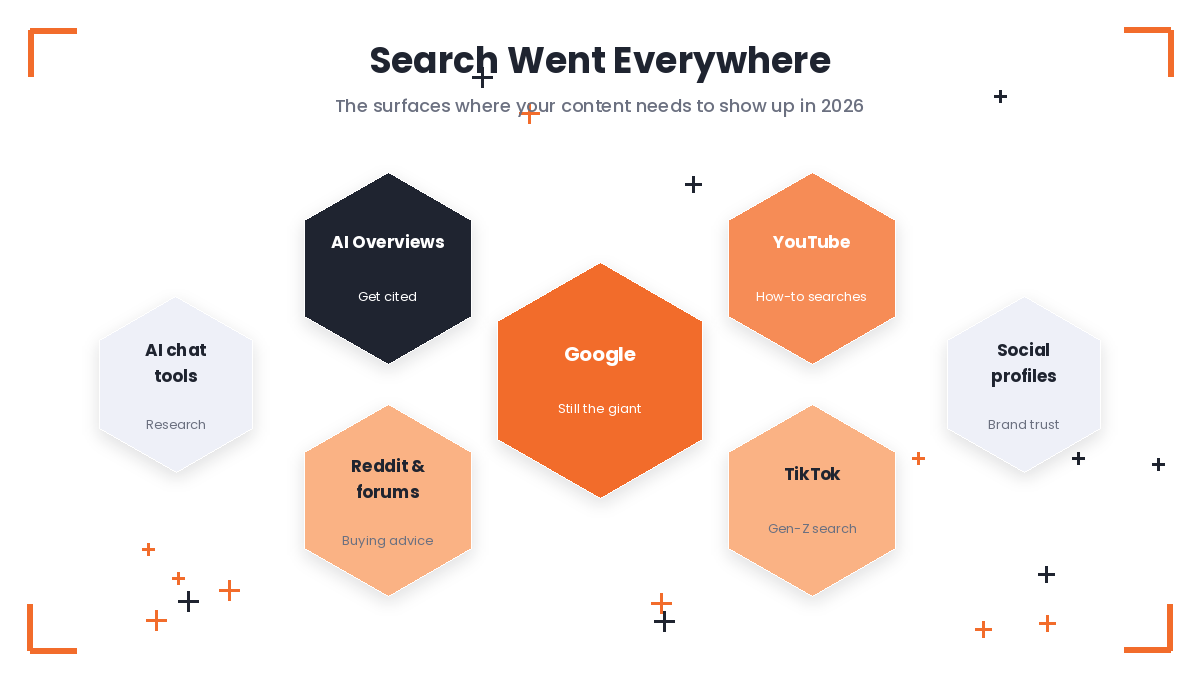
People still search constantly. They just spread it across more places. Younger users search TikTok and YouTube first for many topics. Reddit threads rank for buying questions. Meanwhile, AI chat tools handle a growing slice of research queries. Google remains the giant, yet it no longer owns the whole journey.
For site owners, this is opportunity, not doom. Each new surface is another place your content can appear. We covered this shift in depth in our Search Everywhere Optimization guide, and the core idea holds: optimize for wherever your audience actually looks.
Is SEO Dead or Evolving in 2026? The Honest Verdict
Measure SEO against what a truly dead channel looks like. Dead channels lose their audience, lose investment, and get abandoned by most businesses. SEO fails every one of those tests. Search volume keeps growing. Businesses keep investing in organic visibility. And the majority of websites still earn most of their traffic from search.
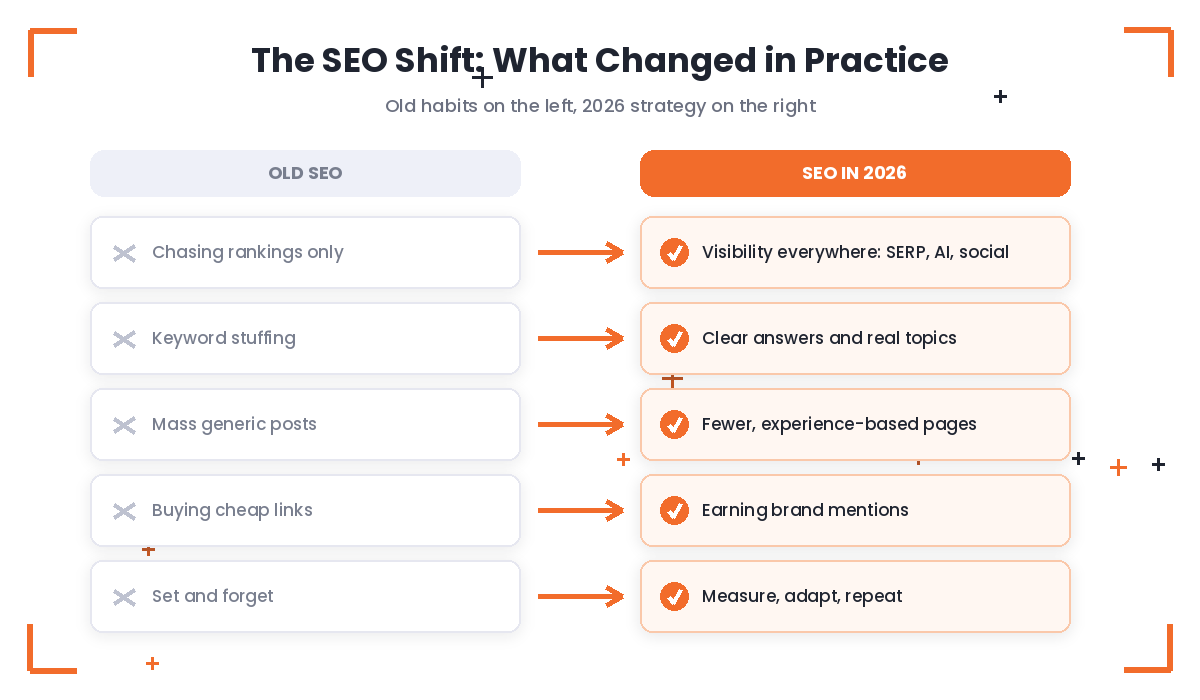
So the honest answer to is SEO dead or evolving in 2026 is clear: evolving. What actually died is a certain style of SEO. Thin AI-generated filler, exact-match keyword stuffing, and purchased link packages stopped working. Google’s systems catch them faster every year. Therefore, the people declaring SEO dead are often mourning tactics, not the channel.
What Evolved SEO Looks Like
The new version has a wider job description. Rankings still matter, but visibility now includes AI citations, social search, and brand recognition. Content must show real experience, because generic text is everywhere and worthless. Additionally, structure matters more: clear answers, FAQ sections, and honest metadata make your pages easy for both people and AI systems to use.
Notice something? These are quality standards, not tricks. The evolution punishes shortcuts and rewards genuine usefulness. For most honest site owners, that is good news.
What Still Works in 2026
Plenty survived the shake-up. Local SEO still fills the Map Pack, and homeowners still call the businesses listed there. Commercial searches still send clicks, because people comparing products want full pages, not a two-line AI summary. Additionally, brand searches keep growing as people look up names they saw elsewhere.
Technical fundamentals also kept their value. Fast pages, clean meta tags, proper indexing, and sensible internal links remain the foundation everything else stands on. In other words, the boring basics never went out of style. They simply became the minimum entry requirement instead of a competitive edge.
How to Adapt: 5 Practical Moves
First, target long-tail keywords with clear intent, because AI answers dominate broad informational queries while specific searches still send clicks. Find them free with our Long Tail Keyword Research tool and the Keyword Generator.
Second, structure content for citation. Open with a direct answer, add FAQ sections, and keep headings clear. This article does exactly that, and so should yours.
Third, keep the technical basics tight. Fast pages, clean metadata, and full indexing never stopped mattering. Check yours with the SEO Checker and PageSpeed Insights tool.
Fourth, show real experience. Original examples, first-hand results, and named authors separate you from the flood of generic content.
Finally, build your brand across platforms. Social profiles, community answers, and genuine mentions feed both classic rankings and AI trust. Track your authority growth monthly with the DA PA DR Checker. For a wider view of where things are heading, our latest SEO trends article pairs well with this one.
Frequently Asked Questions
Is SEO dead or evolving in 2026 for small websites?
Evolving, and small sites can still win. AI answers crowd broad queries, but specific long-tail searches remain wide open. A small site with genuine expertise and tight targeting often beats bigger, generic competitors there.
Do AI Overviews take away all my traffic?
No. They reduce clicks on broad informational queries, sometimes sharply. However, searches with buying intent, local intent, or specific problems still send visitors. Additionally, being cited inside an AI answer builds visibility and trust.
Should I stop writing blog posts?
No, but change what you write. Generic overviews lose. Specific, experience-based posts that answer one clear question win, both in classic results and in AI citations. Quality per post now beats volume.
What is GEO, and does it replace SEO?
GEO means Generative Engine Optimization: making content easy for AI systems to cite. It builds on SEO rather than replacing it, because AI systems pull from indexed, well structured pages. Strong SEO is the entry ticket.
What should I do first if my traffic dropped?
Diagnose before changing anything. Check Search Console for indexing issues, then compare which queries lost clicks. Our guide on why a website is not showing up on Google walks through the full checklist step by step.
So, is SEO dead or evolving in 2026? It is evolving, and the site owners who adapt early will take the traffic others abandon. Start with a free scan from our SEO Checker, then explore all 17 free tools on RanksPeek to build an SEO strategy made for this era.
The RanksPeek Team builds free SEO tools that help website owners check authority, backlinks, keywords, speed and more, with no signup needed. Explore all 17 free tools →