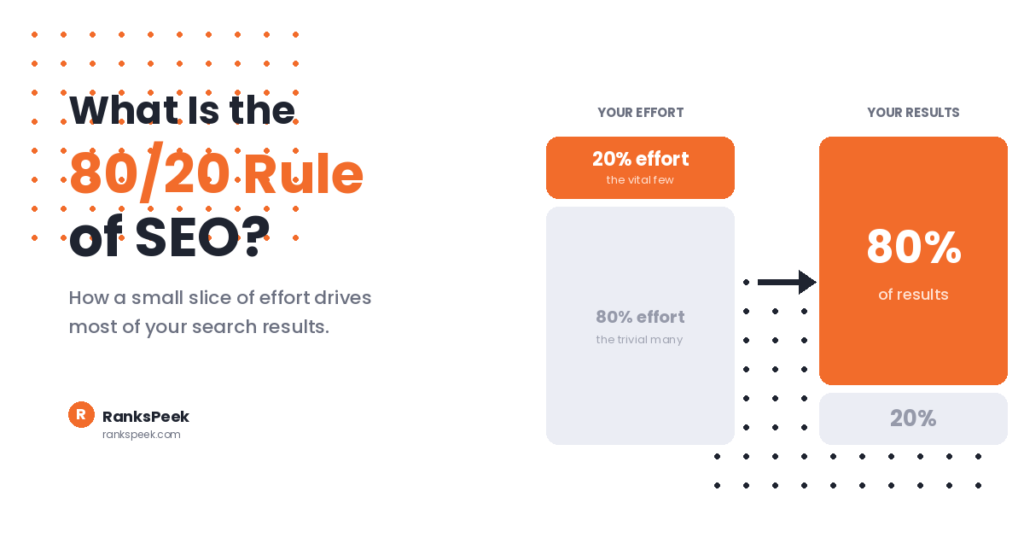
SEO can feel like a thousand tasks with no time to do them. What if most of your results came from just a handful of them? That is the promise of the 80 20 rule of SEO. So what is the 80 20 rule of SEO, and how do you actually use it? In short, roughly 80 percent of your traffic comes from about 20 percent of your work, and this guide shows you how to find that vital 20 percent and pour your energy there.
The 80 20 rule of SEO applies the Pareto Principle to search: about 80 percent of your organic traffic and conversions come from roughly 20 percent of your pages, keywords, and links. Instead of optimizing everything equally, you identify that high-impact 20 percent and focus most of your effort there. The exact ratio varies, but the lesson holds: a few actions drive most results.
Where the 80 20 Rule Comes From
The idea started with an Italian economist named Vilfredo Pareto. He noticed that about 80 percent of the land belonged to roughly 20 percent of the people. Later, people found this pattern almost everywhere. A few inputs usually create most of the outputs. That observation became the Pareto Principle, and marketers soon applied it to search.
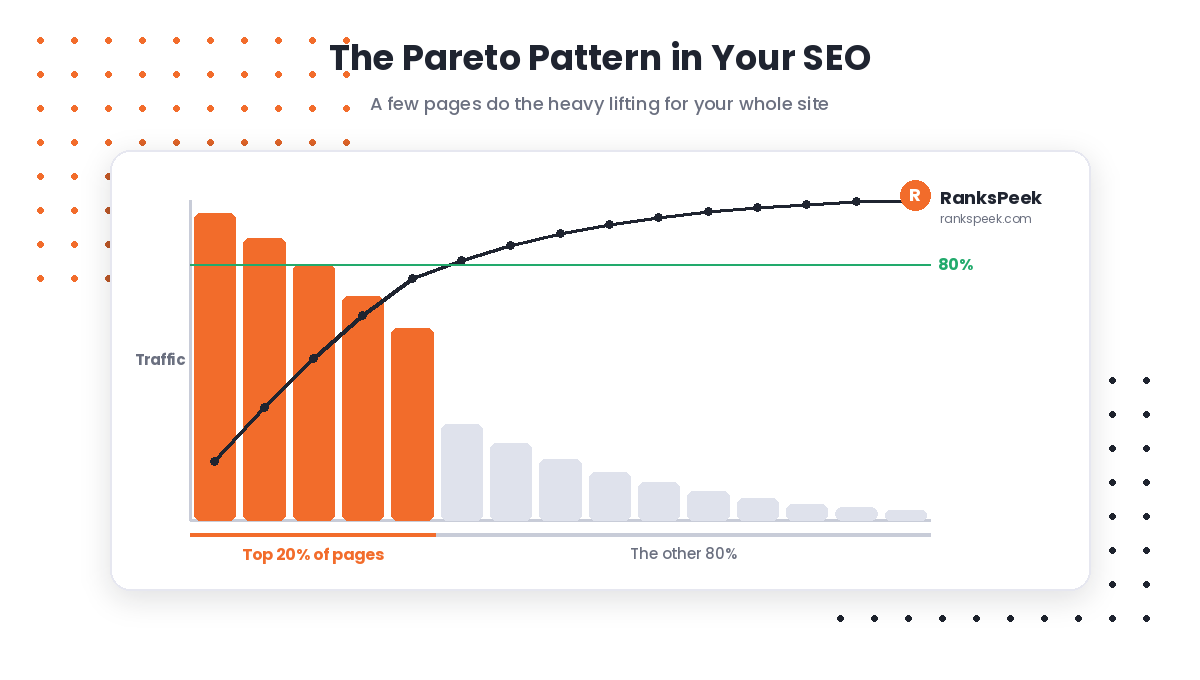
In SEO, the pattern is striking. Usually a small group of pages pulls in most of your visitors. A short list of keywords drives most of your clicks. A handful of backlinks carries most of your authority. So the rule is not about doing less work. It is about doing the work that actually moves the needle.
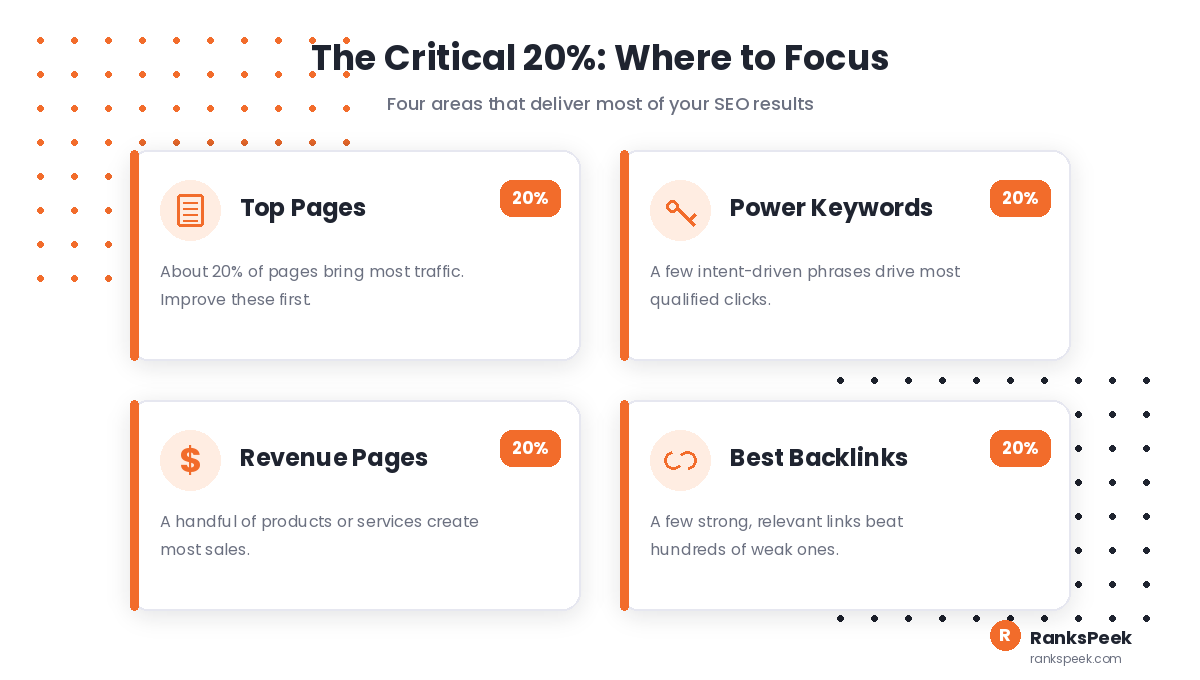
The Critical 20 Percent: Where to Focus
Four areas deliver outsized returns, and they deserve most of your attention. First, your top pages. Usually about 20 percent of your pages generate most of your organic traffic. Find them in Google Search Console, then improve them further with fresh information, better internal links, and stronger calls to action.
Second, your power keywords. A small set of specific, intent-driven phrases brings most of your qualified clicks. Discover more of them with our free Long Tail Keyword Research tool and the Keyword Generator. Third, your revenue pages. For a shop, a few products often drive most sales, so optimize those product pages hardest. Fourth, your best backlinks. A few strong, relevant links beat hundreds of weak ones, and you can track them with our Backlink Checker.
The Other 80 Percent: What to Minimize
The rule works only if you also cut the low-value busywork. Perfectionism on tiny pages is the classic trap. Polishing meta tags on pages nobody visits burns hours for almost no gain. A “good enough” pass is fine there. Similarly, publishing thin content daily rarely pays off. Fewer, deeper articles almost always beat a flood of shallow ones.
Excessive technical tweaking is another time sink. Instead of chasing perfect speed across every page, fix the 20 percent of pages that get real traffic first. Check those with our free PageSpeed Insights tool. Finally, avoid chasing hundreds of thin keywords. Depth beats breadth every single time, so cover your power topics thoroughly rather than everything shallowly.
How to Apply It: A 5-Step Framework
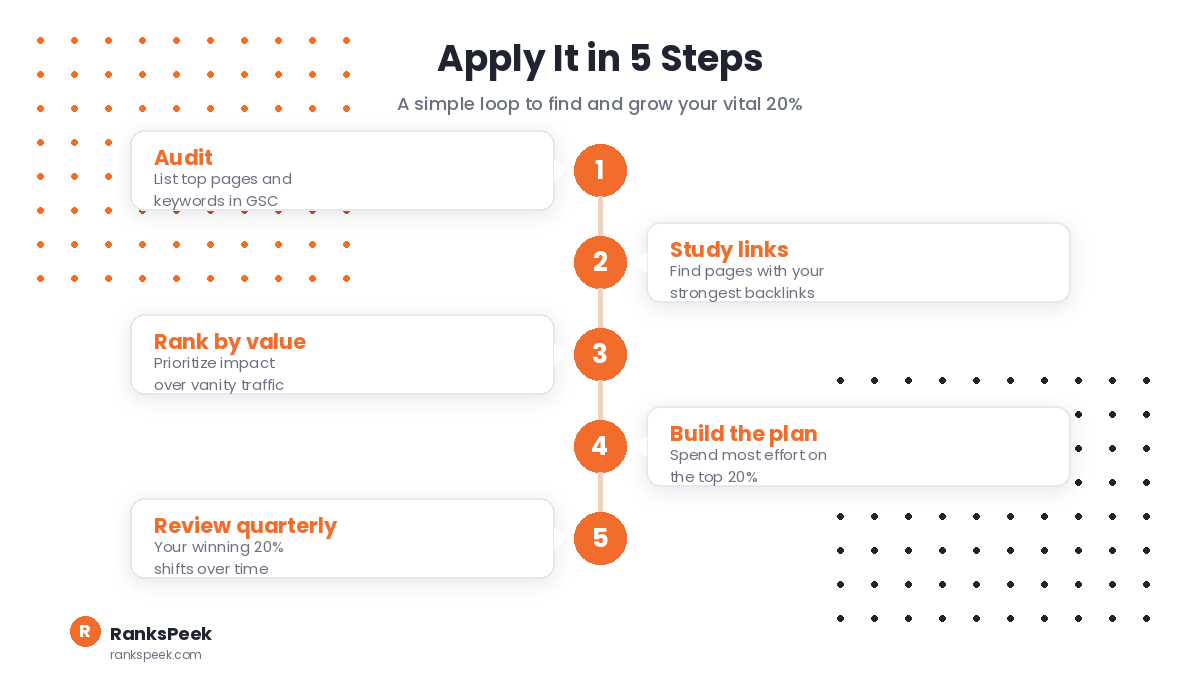
Step one, audit. Open Google Search Console and list the pages and keywords that bring most of your traffic and conversions. Step two, study your links. Find which pages earned your strongest backlinks, because those pages can pass authority to others through internal linking.
Step three, rank by business value. A page with 500 buyers beats one with 10,000 idle browsers, so prioritize impact over vanity numbers. Step four, build your plan. Spend most of your time updating top content, strengthening key pages, and building links to them. Step five, review quarterly. Your winning 20 percent shifts over time, so recheck it every few months. Before you start, scan your whole site with our SEO Checker to spot the biggest gaps first.
Common Mistakes to Avoid
The first mistake is skipping the foundation. You cannot optimize a page that Google never indexed, so confirm indexing before anything else. Our guide on why a website is not showing up on Google covers that check in full.
The second mistake is analysis paralysis. Some people study their data forever and never act. Start with your top ten pages and refine later. The third mistake is abandoning the other 80 percent completely. The rule means proportionate effort, not total neglect, so keep the rest of your site healthy. Finally, do not chase vanity metrics. Traffic that never converts looks nice but pays nothing, so always optimize for business goals.
The 80 20 Rule in 2026
This principle matters more in 2026, not less. AI Overviews now answer many broad, low-value queries directly, so chasing huge generic keywords wastes even more effort than before. Meanwhile, specific, high-intent pages still earn clicks and conversions. In other words, the 20 percent that pays off became easier to spot: it is your focused, intent-matching content.
Additionally, quality signals keep rising in importance. A few genuinely excellent pages now outperform a large library of average ones for both classic rankings and AI citations. So the modern version of the rule is simple. Build fewer, better assets, and give them most of your effort. That focus is exactly what the 80 20 rule of SEO has always rewarded.
Frequently Asked Questions
What is the 80 20 rule of SEO in simple words?
It means most of your results come from a small part of your work. About 80 percent of traffic and conversions flow from roughly 20 percent of your pages, keywords, and links. You focus on that vital 20 percent instead of spreading effort evenly.
Is the ratio always exactly 80/20?
No. Sometimes it is 70/30, sometimes 90/10. The exact split does not matter. The point is that a minority of your actions drives the majority of your outcomes, so you find and prioritize them.
How do I find my 20 percent?
Use Google Search Console to see which pages and queries bring most of your clicks and conversions. Then check which pages hold your best backlinks. Those overlapping winners are your critical 20 percent.
Does the 80 20 rule mean I ignore 80 percent of my site?
No. It means proportionate attention, not neglect. Give your top 20 percent most of your effort, but keep the rest indexed, functional, and healthy so it can still capture opportunistic wins.
Can small websites use the 80 20 rule of SEO?
Yes, and they benefit most. Small sites have limited time, so focusing on the few pages and keywords that convert is the fastest path to growth. Our free SEO Checker helps you find where to start.
So the answer to what is the 80 20 rule of SEO is a mindset: find the few things that work, and do them exceptionally well. Start by scanning your site with our free SEO Checker, then explore all 17 free tools on RanksPeek to focus your effort where it truly counts.
The RanksPeek Team builds free SEO tools that help website owners check authority, backlinks, keywords, speed and more, with no signup needed. Explore all 17 free tools →