The latest SEO trends 2026 has brought are bigger than anything the industry has seen in years. AI now answers many searches directly, Google’s results are full of videos and summaries, and the old habit of chasing keywords alone no longer works. The good news: the websites that adapt are winning more visibility than ever, and most of the winning moves are free. This guide breaks down the six trends that matter right now and shows you exactly how to act on each one.
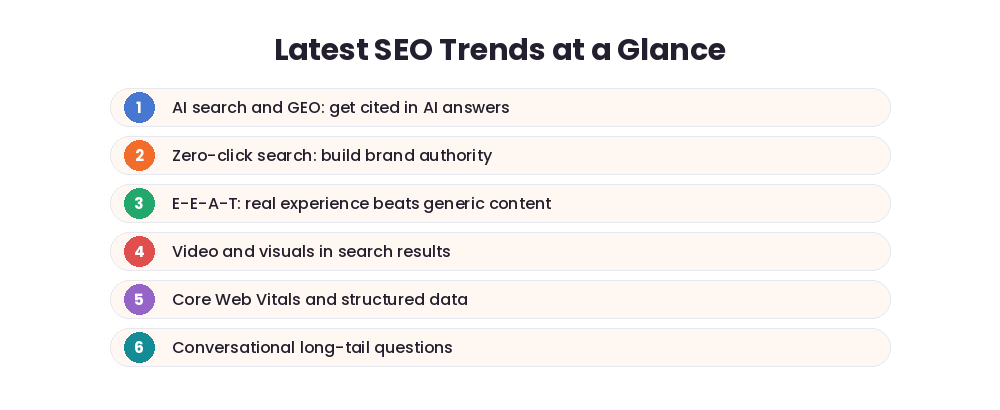
The biggest SEO trends right now are optimizing for AI search answers (getting your content cited in AI Overviews), building brand authority for a zero-click world, proving real experience through E-E-A-T, adding video and custom visuals, keeping Core Web Vitals fast, and targeting conversational long-tail questions. Sites that combine helpful content with strong technical basics are winning across both Google and AI search.
Latest SEO Trends 2026 at a Glance
Search has become a mix of classic results, AI summaries, videos, and forum threads. That changes where visibility comes from, but it does not change the core rule: the most helpful, trustworthy content wins. Here are the six trends shaping results right now:
Trend 1: AI Search and GEO (Generative Engine Optimization)
AI tools like Google’s AI Overviews now answer many questions directly at the top of the results, and they cite the sources they used. Getting cited is the new page one. This is called GEO, Generative Engine Optimization, and it rewards a specific style of content:
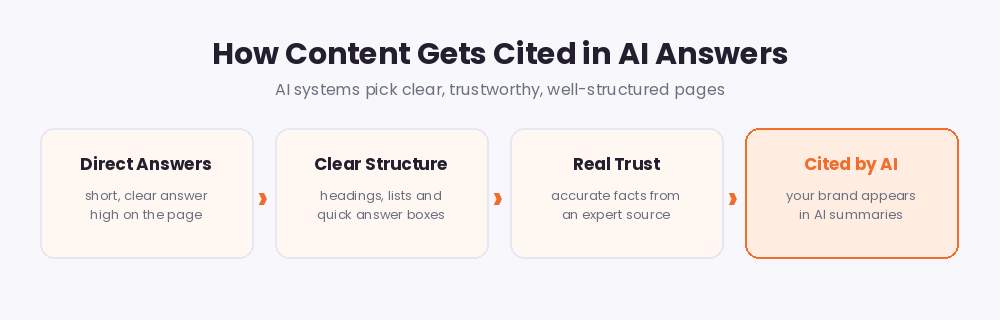
- Give the answer early. Put a short, clear answer near the top of the page, then expand below. Quick answer boxes work perfectly for this.
- Structure everything. Clear headings, short paragraphs, and lists make your content easy for AI systems to read and quote.
- Be an entity, not just a keyword. AI systems recognize brands, people, and topics. A consistent brand name and focused topic area make you easier to cite.
Trend 2: Zero-Click Search and Brand Authority
Many searches now end without a click, because the answer appears right on the results page. That sounds scary, but it changes strategy rather than ending it. When fewer clicks are available, the clicks and citations that remain go to trusted names. Brand authority is becoming as valuable as backlinks: being mentioned and discussed across the web, in communities, on social platforms, and in industry sites, teaches both Google and AI systems that your brand is a source worth quoting. Practical move: publish genuinely useful content people mention, and keep your brand name consistent everywhere.
Trend 3: E-E-A-T and Real Experience
E-E-A-T stands for Experience, Expertise, Authoritativeness, and Trustworthiness, the qualities Google’s systems look for in content. The first E, real experience, is the trend to watch. Generic, mass-produced AI text is everywhere now, so content with firsthand experience stands out: actual testing, real screenshots, honest results, and opinions only a practitioner could have. This is also why forums and user-generated content have gained so much visibility, because readers trust peer experiences. For your site, the lesson is simple: write what you have actually done, show your proof, and say what generic articles cannot.
Trend 4: Video and Visual Search
Search results are no longer walls of blue links. Video carousels, image packs, and visual answers now share the page. Text-only content misses those placements entirely. Two practical moves: first, add custom graphics and visuals to your posts, because original images earn references and stand out in image results. Second, where it fits your topic, create short videos and embed them in your articles; video results give you a second doorway into the same search.
Trend 5: Technical Foundations Still Decide Winners
Every shiny trend still sits on the same foundation: a fast, stable, crawlable website. Core Web Vitals, Google’s speed and stability metrics, remain part of how pages are judged, and slow sites lose visitors before any content is read. Structured data (schema markup) matters more too, because it feeds search engines and AI systems clean, machine-readable facts about your pages. Start by testing your site with our free PageSpeed Insights tool, fix the biggest issues first, and keep your meta tags clean on every important page.
Trend 6: Conversational Long-Tail Questions
People now search the way they talk, typing and speaking full questions instead of two-word keywords. AI search makes this even stronger, because conversations naturally produce specific, detailed queries. For website owners this is an opportunity: specific questions are easier to rank for and easier to get cited for. Use our free Long Tail Keyword tool to find the exact questions your audience asks, then answer each one thoroughly on its own page.
How to Act on These Trends for Free
You do not need an expensive toolkit to follow the trends. Here is a simple action plan:
- Audit your site today. Run your key pages through the free SEO Checker to find quick wins.
- Add quick answers. Give every important article a short, direct answer near the top, AI systems love it.
- Research real questions. Use the Keyword Generator and Long Tail tool to find conversational queries.
- Fix speed first. Test with PageSpeed Insights and repair the biggest slowdowns.
- Track your authority. Watch your progress with the DA PA DR Checker as your brand grows.
For the official view on how Google evaluates content, the Google Search Central documentation is worth a bookmark, and Google’s web.dev covers Core Web Vitals in depth.
Frequently Asked Questions
What are the latest SEO trends?
The biggest trends are AI search optimization (GEO), building brand authority for zero-click results, E-E-A-T with real experience, video and visual content, strong Core Web Vitals with structured data, and conversational long-tail questions.
What is GEO in SEO?
GEO stands for Generative Engine Optimization: structuring your content so AI search systems can easily read, quote, and cite it in their answers. Clear direct answers and clean structure are its core.
Is SEO dead because of AI?
No. Search behavior is changing, not disappearing. AI answers still rely on websites as sources, so helpful, trustworthy sites now win visibility in both classic results and AI citations.
Do keywords still matter?
Yes, but intent matters more. Instead of stuffing keywords, target the real questions people ask, especially specific long-tail queries, and answer them clearly.
What should a small website focus on first?
Three things: fix site speed, add clear quick answers to your best pages, and target specific long-tail questions. Those moves cover the biggest trends with the least effort.
The trends will keep evolving, but helpful content on a fast site never goes out of style. Start with a free audit using our SEO Checker and get ahead of the curve today.
The RanksPeek Team builds free SEO tools that help website owners check authority, backlinks, keywords, speed and more, with no signup needed. Explore all 17 free tools →