A rising spam score feels alarming, especially when you have worked hard on your website. The good news is that you can reduce spam score with a clear cleanup process, and most of it costs nothing except a little time. In this guide, you will learn what spam score actually measures, what pushes it up, and the exact steps that bring it back down.
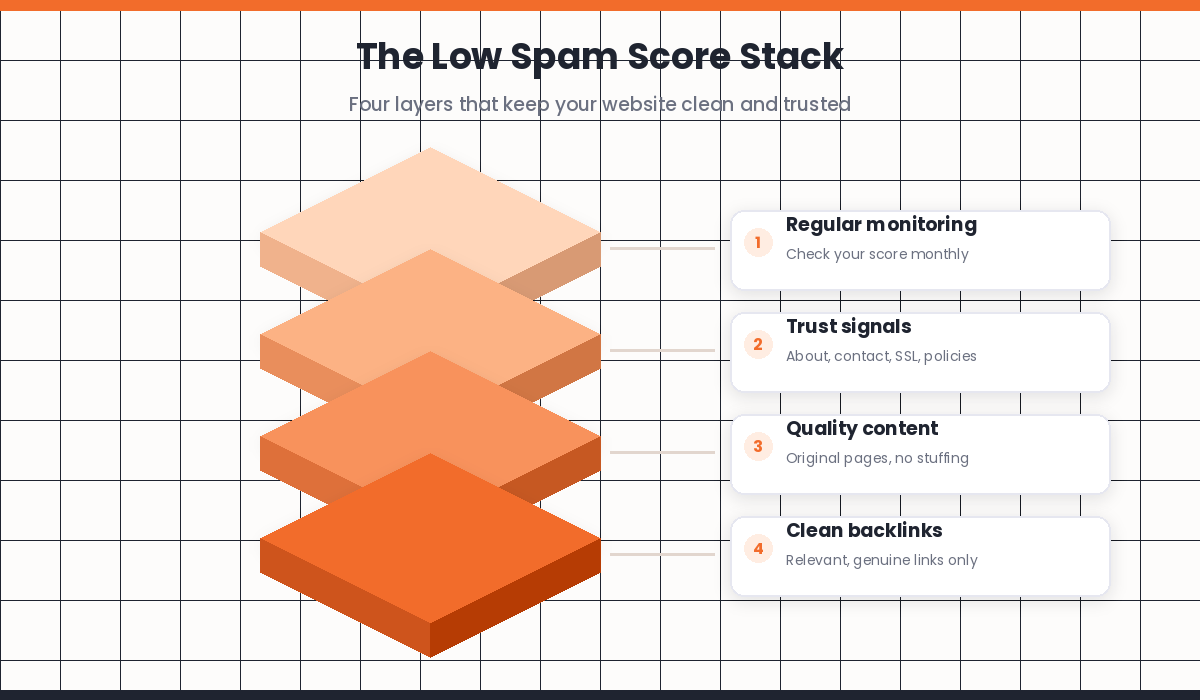
To reduce spam score, audit your backlink profile and remove or disavow toxic links, delete thin or duplicate content, add trust signals like an about page, contact details, and SSL, avoid keyword stuffing, and build genuine links from relevant websites. Improvements usually appear after the next index update.
What Is Spam Score, Exactly?
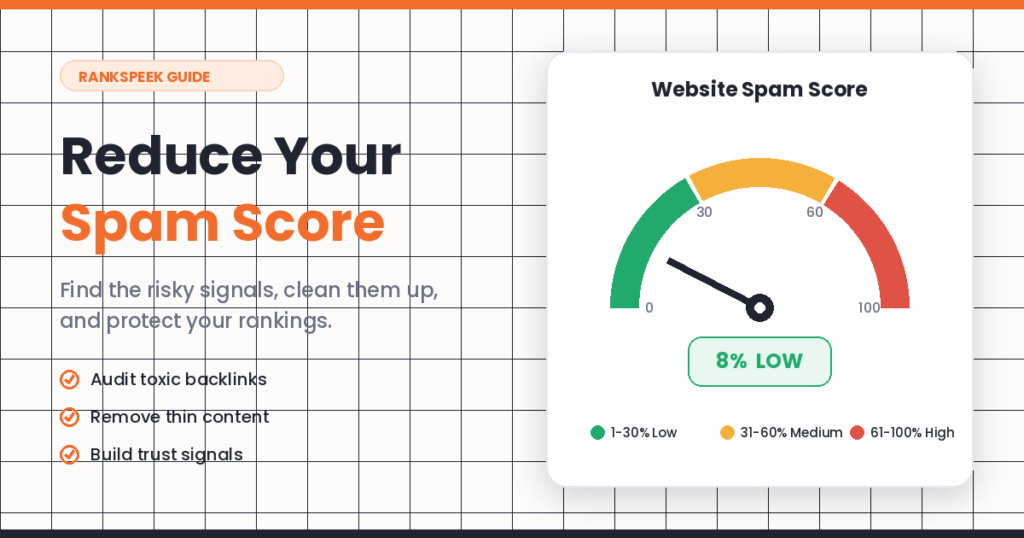
Spam score is a metric created by Moz that estimates how similar your website looks to sites that have been penalized or banned by search engines. It runs from 0 to 100 percent, and it is based on a set of signals that penalized sites tend to share. Generally, 1 to 30 percent counts as low, 31 to 60 percent as medium, and anything above 60 percent as high.
One important point before anything else: a high score does not mean your site is penalized. Instead, it means your site shares some patterns with risky sites, so it deserves a closer look. Think of it as a warning light, not a verdict.
What Raises the Spam Score of a Website
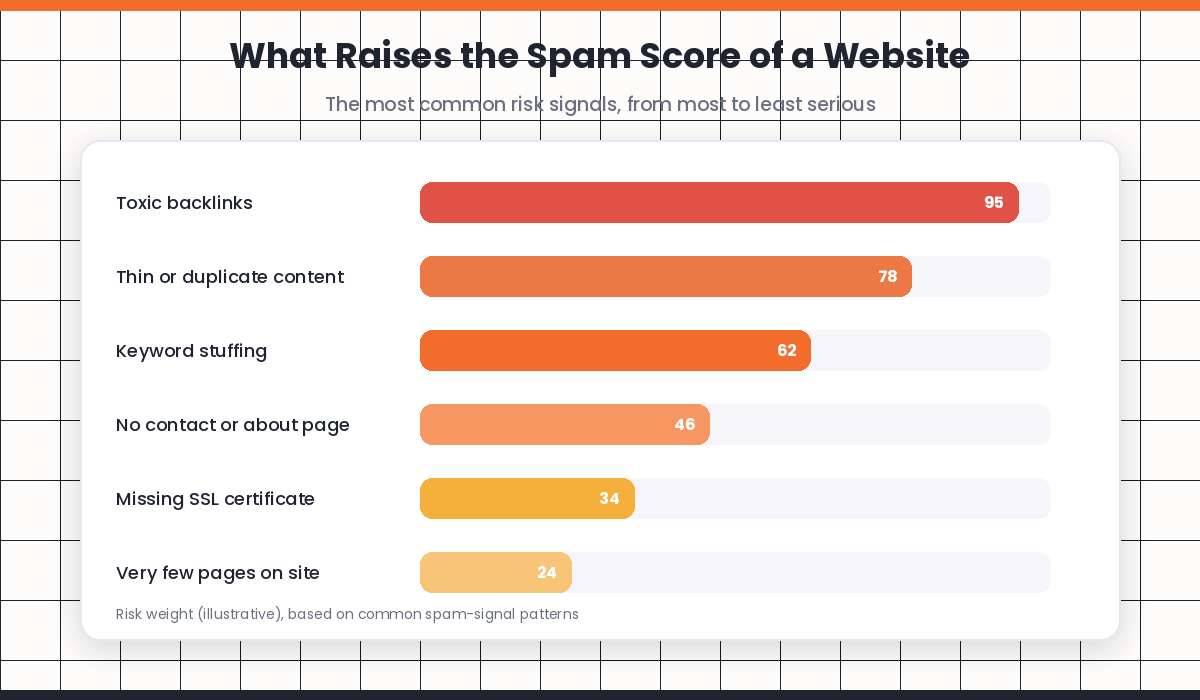
Several signals can push your score up, and most of them fall into three groups. First, link problems: backlinks from spammy directories, link farms, unrelated foreign sites, or networks built only for links. Second, content problems: thin pages, duplicate content, keyword stuffing, and pages with very little original value. Third, missing trust signals: no contact information, no about page, no SSL certificate, or a site with very few pages overall.
Because toxic backlinks are the most common cause, your cleanup should usually start there. However, checking all three groups gives you the full picture.
Step Zero: Check Your Current Spam Score
You cannot fix what you have not measured. So before making changes, run your domain through our free Spam Score Checker and note the number. Additionally, test a few competitors, because context matters: if healthy sites in your niche sit at 2 percent and you sit at 40 percent, that gap tells you how much work is ahead.
While you are at it, check your Domain Authority too. Together, these two numbers give you a quick health snapshot you can track month by month.
7 Steps to Reduce Spam Score
1. Audit Your Backlink Profile
Start by listing every site that links to you with our free Backlink Checker. Then go through the list and flag anything suspicious: sites in unrelated niches, pages stuffed with hundreds of outbound links, foreign gambling or pharmacy sites, and domains with names that look auto-generated.
2. Request Removal of Toxic Links
Next, contact the owners of flagged sites and politely ask them to remove your link. Many will ignore you, and that is fine, because the request itself creates a record of your good faith effort. Keep a simple spreadsheet of who you contacted and when.
3. Disavow What You Cannot Remove
For links that stay up despite your requests, Google provides a disavow tool that tells its systems to ignore those links. However, use it carefully, since disavowing good links can hurt you. Google’s own disavow documentation recommends it only when you have a significant number of spammy links. Read it before you upload anything.
4. Remove Thin and Duplicate Content
Now turn to your own pages. Delete or merge pages that offer little value, for example near-empty tag pages or five versions of the same article. Consequently, the average quality of your site rises, and that improves far more than just your spam score.
5. Fix Keyword Stuffing
Pages that repeat the same phrase unnaturally look spammy to both readers and algorithms. Paste your key pages into our Keyword Density Checker, and rewrite any page where one phrase dominates. As a rule, if a sentence sounds robotic when read aloud, it needs a rewrite.
6. Add Trust Signals
Legitimate businesses show who they are. Therefore, make sure your site has a clear about page, a contact page with real details, a privacy policy, and a valid SSL certificate. Also check your meta tags, because complete, honest titles and descriptions are small trust signals that add up.
7. Build Genuine Links Going Forward
Finally, replace bad links with good ones. Earn mentions from relevant blogs, local directories, suppliers, and industry sites. One genuine link from a related website does more for you than fifty directory submissions, so aim for quality every time.
Does Spam Score Affect Google Rankings?
Here is the honest answer: Google does not use Moz’s spam score. It is a third party metric, so reducing it will not directly change your rankings. However, the signals behind the score, toxic links, thin content, and missing trust elements, are exactly the things Google’s own spam systems evaluate. In other words, when you reduce spam score, you are cleaning up the same issues that protect you from real ranking problems. That is why the cleanup is worth doing regardless of the number itself.
What Changed in 2026
Search engines have become noticeably stricter about link quality and mass-produced content. Google’s spam systems now detect unnatural link patterns and low value pages at scale, so sites that rely on cheap link packages are getting caught faster than before. Meanwhile, AI Overviews reward sites with clear answers and strong trust signals, which means the cleanup steps above now pay off twice: a lower spam score and a better chance of being cited in AI answers.
Additionally, buying bulk backlinks from marketplaces has become one of the fastest ways to raise your spam score in 2026. If a link costs five dollars and promises instant authority, it will almost certainly hurt you. Patience and genuine outreach remain the only safe route.
Frequently Asked Questions
How long does it take to reduce spam score?
After you clean up links and content, the score usually updates when the metric provider refreshes its index, which can take several weeks to a couple of months. So make your changes, then re-check monthly with the Spam Score Checker rather than daily.
What is a good spam score?
Anything from 1 to 30 percent is considered low risk, and most healthy websites sit in the single digits. If your score is under 10 percent, focus your energy on content and genuine link building instead of cleanup.
Can competitors increase my spam score with bad links?
Negative SEO attacks are rare, but they happen. Fortunately, the fix is the same process described above: identify the toxic links, then disavow them. Google also states that its systems ignore most spammy links automatically.
Will disavowing links lower my spam score immediately?
No. The disavow tool tells Google to ignore links, but third party metrics update on their own schedule. Moreover, disavowing does not remove links from the web, so the metric may still see them for a while.
Does a new website always start with a low spam score?
Usually yes, because a new site has few links and few signals. However, a brand new site with very little content can show a slightly elevated score at first, and it settles down as you add real pages and earn natural links.
Ready to see where your website stands today? Check your number with our free Spam Score Checker, then explore all 17 free tools on RanksPeek to keep your site clean, fast, and trusted.
The RanksPeek Team builds free SEO tools that help website owners check authority, backlinks, keywords, speed and more, with no signup needed. Explore all 17 free tools →