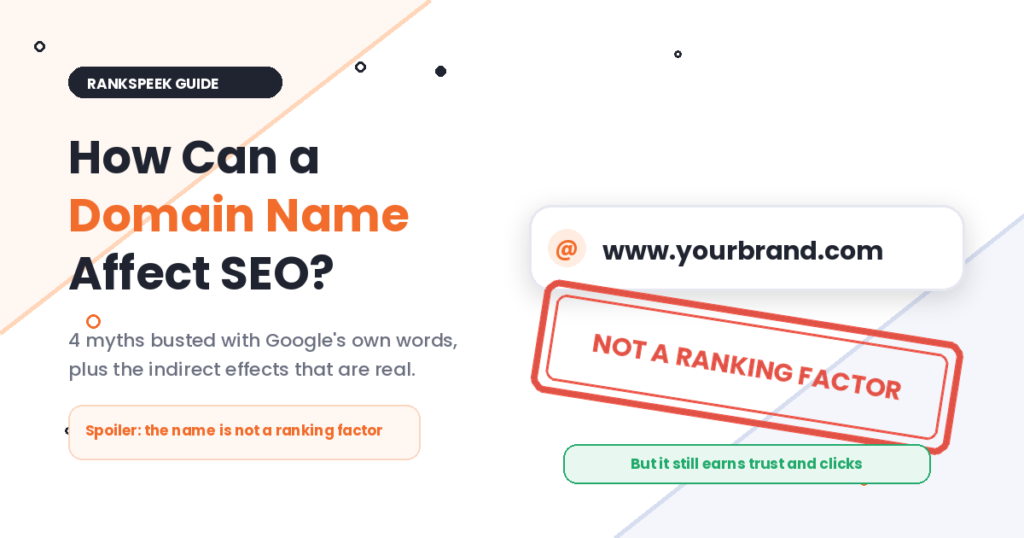
Site owners blame their domain name for low rankings all the time. Others buy “SEO-friendly” domains expecting magic. So how can a domain name affect SEO rankings, really? The honest answer: not directly at all, but indirectly in ways that matter. In this guide, we bust the four biggest domain myths with Google’s own statements, then show you where a domain name genuinely helps.
A domain name is not a direct ranking factor. Keywords in the name, domain age, and registration length all make no difference to Google. However, a domain affects rankings indirectly: a short, credible, memorable name earns more trust, more clicks, and more brand searches, and those signals do influence your visibility over time.
The Short Answer: Not a Direct Ranking Factor
Google has answered this question many times, and the answer stays boring. The words in your domain do not move your rankings. The algorithm judges your content, your links, your speed, and your user experience. It does not hand out points for a clever name.
However, “not a ranking factor” does not mean “does not matter”. A domain shapes how people see your site before they ever click it. That human layer creates real indirect effects, and we will cover them properly. First, let’s clear out the myths, because they cost site owners money every single day.
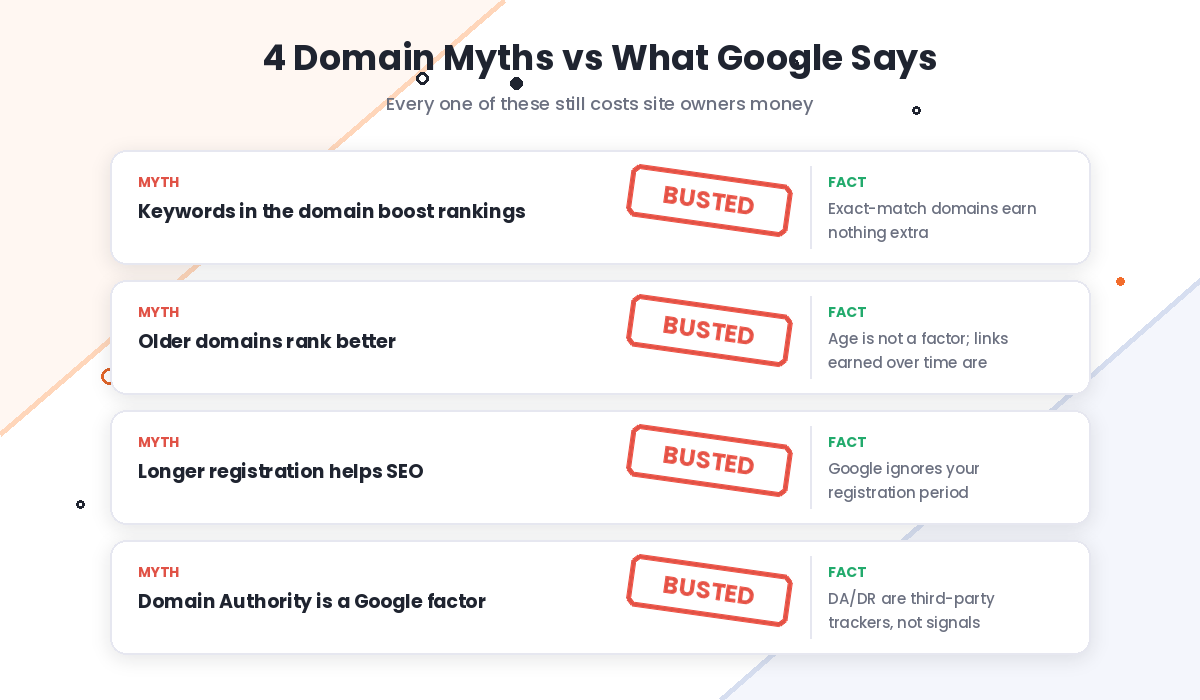
4 Domain Name Myths, Busted
Myth 1: Keywords in the Domain Boost Rankings
Years ago, people bought exact-match domains like best-hiking-gear-online.com and ranked with thin sites. Google closed that door long ago. Today, a keyword-stuffed name gives you zero ranking advantage, and it often looks spammy to users. A clean brand name beats a keyword string every time.
Myth 2: Older Domains Rank Better
Domain age is not a ranking factor, and Google employees have confirmed this repeatedly. The confusion comes from a side effect: older sites had more time to earn links and authority. The age itself does nothing. So before you pay extra for an “aged” domain, check what actually matters: its link history. Run any domain through our free Domain Age Checker and then inspect its Spam Score, because an old domain can carry old penalties too.
Myth 3: Longer Registration Periods Help SEO
Some registrars suggest that paying for ten years signals “seriousness” to Google. It does not. Registration length sits between you and your registrar, and Google has said plainly that it plays no role in rankings. Register for whatever period suits your budget.
Myth 4: Domain Authority Is a Google Ranking Factor
DA comes from Moz, and DR comes from Ahrefs. Google uses neither. These scores estimate your backlink strength from the outside, so they work well as progress trackers, nothing more. We explained the healthy way to use them in our guide on what is a good domain authority for a new website.
What About the Extension: .com vs .net?
The ending of your domain follows the same rule: generic extensions rank equally, and the differences are human, not algorithmic. We covered that battle in full detail, including country extensions and the new .ai wave, in our guide Is .com or .net better for SEO. The one-line summary: pick .com when you can, and never fear building on the alternatives.
How Can a Domain Name Affect SEO Rankings? The Real Answer
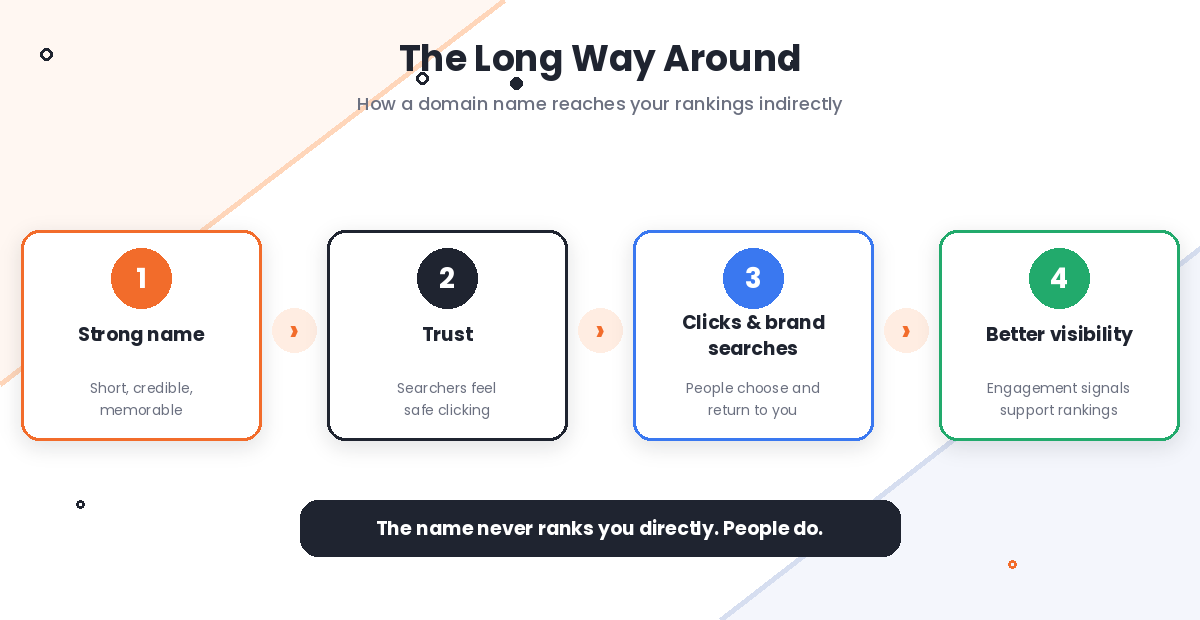
Here is where the name earns its importance. The effect runs through people, then reaches Google. A credible, professional name wins more clicks in the search results, because searchers trust it more. More clicks from the same position mean more traffic, more engagement, and more return visitors.
Memorability adds a second path. When people remember your name, they search for it directly. Those brand searches tell Google that real people want your site specifically. Consequently, the name works like a slow, steady vote of confidence. So how can a domain name affect SEO rankings? The long way around: name builds trust, trust earns clicks and brand searches, and those signals support your visibility.
One warning belongs here. Buying an expired domain to ride its old reputation now violates Google’s spam policies under the expired domain abuse rule. Sites doing it can lose their visibility entirely. If you buy a previously owned domain, buy it for the name, then earn your own reputation on it.
How to Choose a Domain Name That Helps
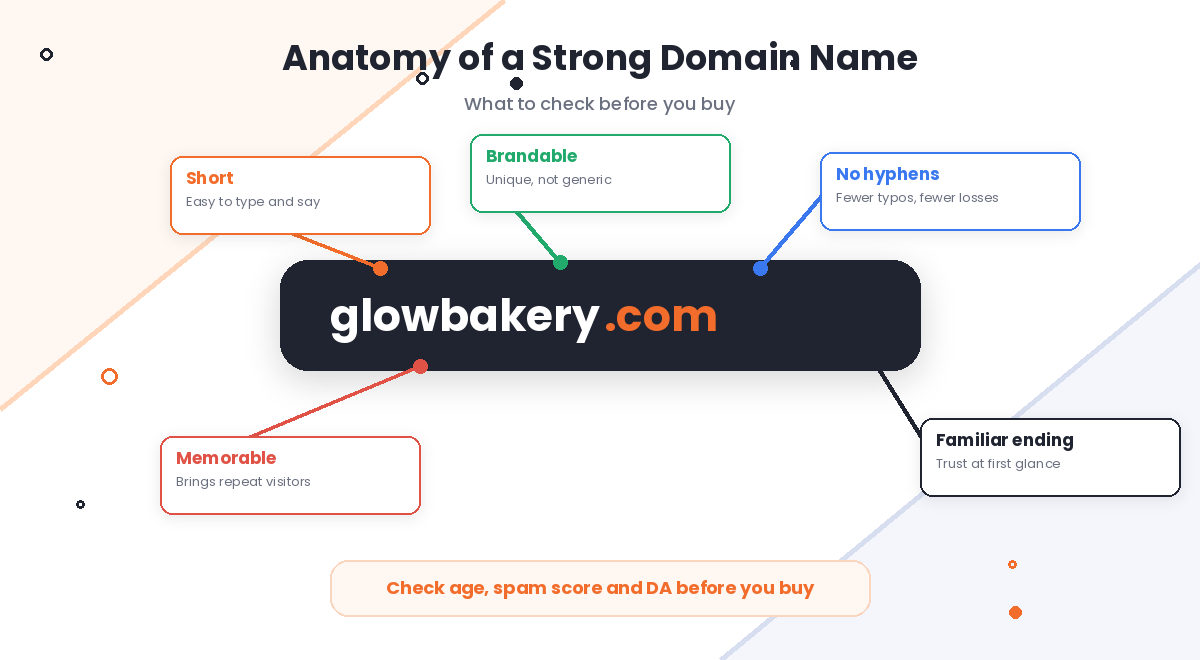
Keep it short, because short names survive typing, saying, and remembering. Make it brandable: unique enough to stand out, simple enough to spell after hearing it once. Avoid hyphens and numbers, since both cause typos and lost visitors. Additionally, prefer a familiar extension for that small extra dose of trust.
Before you commit, spend five minutes on due diligence. Check the domain’s age and history with the Domain Age Checker, review its authority with the DA PA DR Checker, and after launch, scan your setup with the SEO Checker. The name starts the journey; the work decides the destination.
What Changed in 2026
Brand names carry more weight than ever this year, because AI answer engines cite sources they recognize. A clear, consistent brand across your site, social profiles, and mentions makes it easier for AI systems to identify and reference you. The domain itself stays neutral; the brand built on it became more valuable.
Additionally, Google keeps tightening enforcement against expired domain abuse. The shortcut of buying old domains for their history gets riskier every update. Meanwhile, honest brand building keeps compounding. In 2026, the boring path is officially the smart path.
Frequently Asked Questions
So how can a domain name affect SEO rankings in 2026?
Only indirectly. The name influences trust, clicks, and brand searches, and those human signals support your visibility. The words in the domain carry no direct ranking weight at all.
Should I put my main keyword in my domain?
Only if it makes a natural brand name. A keyword in the domain gives no ranking boost, and a stuffed name can reduce trust. Brand first, keyword optional.
Is it bad to change my domain name later?
It carries risk, so treat it as surgery. You need 301 redirects for every page, an updated sitemap, and Search Console verification for the new domain. Expect some temporary movement even with a perfect migration.
Do hyphens in a domain hurt SEO?
Not directly, but they hurt humans. People forget hyphens, mistype the name, and land elsewhere. Since typing errors cost you visitors, a hyphen-free name simply performs better.
How do I check a domain’s history before buying it?
Start with our free Domain Age Checker to see its age, then review its spam score and authority. A clean history matters far more than an impressive age.
Your domain name will not rank your site, but it can quietly help everything that does. Pick a short, credible name, verify its history with the free Domain Age Checker, and then explore all 17 free tools on RanksPeek to build rankings the way that actually works.
The RanksPeek Team builds free SEO tools that help website owners check authority, backlinks, keywords, speed and more, with no signup needed. Explore all 17 free tools →