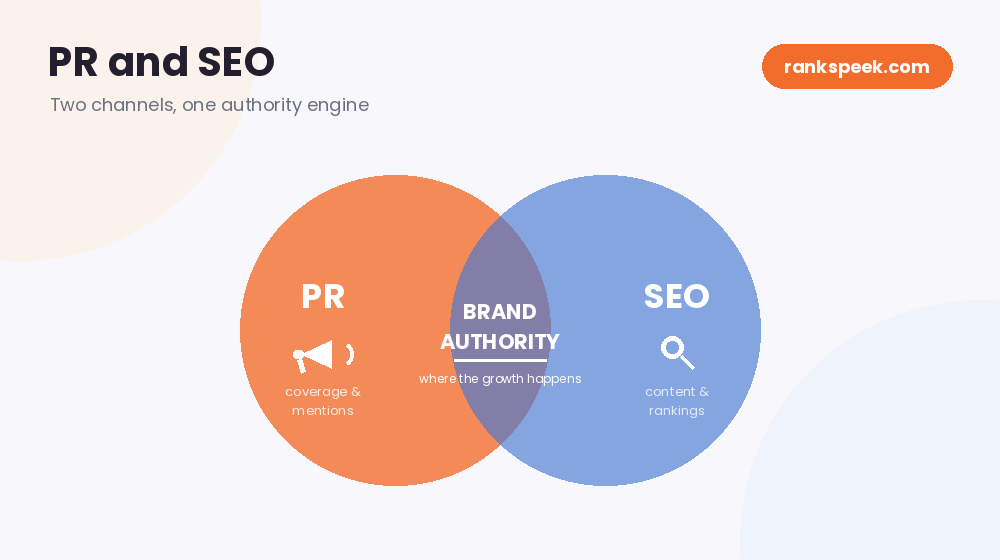
For years, PR and SEO lived in separate worlds. PR chased media coverage, while SEO chased rankings, and the two teams rarely talked. However, that separation no longer makes sense. Today, Google and AI tools judge your brand by the same evidence: mentions in trusted places, links from real websites, expert quotes, and honest reviews. Because PR and SEO both create exactly those signals, they work far better as one strategy. In this guide, you will learn why the combination is so powerful, and then a simple 5-step plan to put it to work on your own site.
PR and SEO work together by feeding the same trust signals. PR earns media coverage, brand mentions, and expert quotes, while SEO turns that attention into rankings through helpful content, earned backlinks, and a healthy website. As a result, search engines and AI tools see one consistent, credible brand, which lifts visibility everywhere at once.
What Are PR and SEO?
First, a quick definition of each side. PR (public relations) is the work of earning attention and trust for your brand through media coverage, interviews, expert commentary, and relationships with journalists and creators. SEO (search engine optimization), on the other hand, is the work of making your website rank in search results through helpful content, technical health, and backlinks. In short, PR builds your reputation with people, while SEO builds your visibility with search engines. Both matter, and most importantly, each one makes the other stronger.
Why PR and SEO Work Better Together
Search engines have always used third-party evidence to decide which sites deserve to rank. Backlinks were the classic example. However, AI search has raised the stakes, because AI tools also learn about brands from what the wider web says: news coverage, reviews, forum discussions, and expert quotes. So when PR earns a mention and SEO earns a link, both actions feed the same engine:
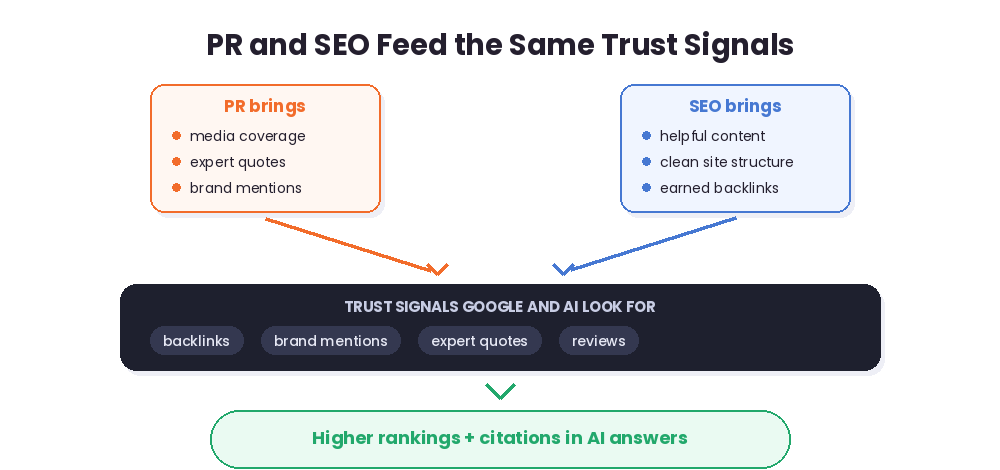
Consider what happens when the two teams stay separate. Content ranks but never gets mentioned anywhere, so it builds no authority. Meanwhile, media coverage creates buzz but links to nothing useful, so the attention fades in a day. Together, however, coverage points at content worth ranking, and content gives journalists something worth covering. As a result, every win compounds instead of evaporating.
The 5-Step PR and SEO Plan
You do not need a big team to combine PR and SEO. In fact, even a solo website owner can follow this plan:
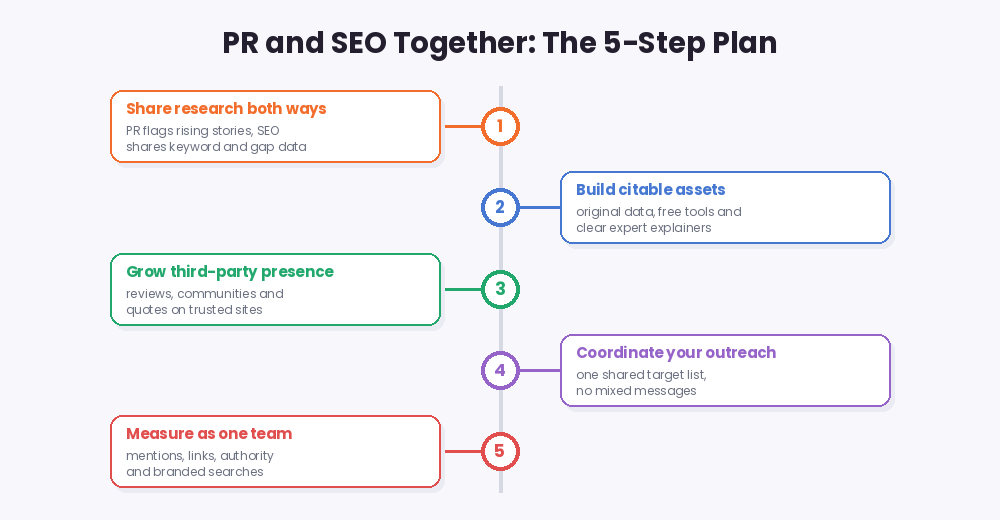
- Step 1. Share research both ways. First, let each side inform the other. Rising stories and journalist questions suggest content topics, while keyword research reveals which topics people actually search. For example, you can spot rising themes with Google Trends and then find the exact phrases with our free Keyword Generator.
- Step 2. Build citable assets. Next, create things worth mentioning: original data, a genuinely useful free tool, or a clear expert explainer. Because journalists and AI systems both prefer specific, quotable material, these assets earn links for years.
- Step 3. Grow your third-party presence. Then, work on the places you do not own. Encourage honest reviews, answer questions helpfully in communities, and offer expert quotes to writers in your niche. This matters because AI answers often cite third-party sources about a brand more than the brand’s own website.
- Step 4. Coordinate your outreach. Also, keep one shared list of target websites and writers, so your pitches stay consistent. Before pitching, check every outlet’s strength with the Bulk DA PA Checker, and screen out risky sites using the Spam Score Checker. That way, your effort goes to places that actually build authority.
- Step 5. Measure as one team. Finally, judge every asset by shared questions: did it earn mentions, did it earn links, and did it lift search visibility? We cover the exact metrics below.
Content That Earns Coverage and Links
Not every page can win both attention and rankings, so focus on the formats that reliably do. Original research is the strongest, because unique numbers get quoted and linked naturally. Free tools come a close second, since they solve real problems and earn mentions long after launch. Additionally, clear explainer content helps writers and AI systems describe your brand accurately. Whatever you build, give it a clean, crawlable page on your own site, and then connect it to related pages with internal links so the authority spreads.
How to Measure PR and SEO Together
Shared work needs shared scorekeeping, so track these four signals over time:
- New referring domains. Unique websites linking to you matter more than raw link counts. Check yours anytime with our free Backlink Checker.
- Growing authority. Watch your DA, PA, and DR climb month by month with the DA PA DR Checker. Because these scores move slowly, judge the direction rather than the number.
- Branded searches. When coverage makes people curious, they search your brand by name. Google Search Console shows this lift clearly, especially around coverage dates.
- Site health. Of course, all that earned attention lands on your website, so keep it strong with a regular SEO Checker audit.
PR and SEO in 2026
In 2026, the case for combining PR and SEO is stronger than ever. Google’s results now mix AI Overviews, news, videos, and classic links, and those AI answers lean heavily on trusted third-party sources when they describe brands. Consequently, a brand that is mentioned consistently across reliable sites gets recommended, while an invisible brand gets skipped. Google’s own Search Central documentation keeps pointing the same direction: demonstrate real experience and trustworthiness. PR earns that proof, SEO packages it for search, and together they compound into lasting authority.
Frequently Asked Questions
What is the difference between PR and SEO?
PR earns attention and trust through media coverage, mentions, and expert commentary. SEO earns visibility in search results through content, links, and technical health. In practice, PR and SEO overlap heavily, because both create the trust signals search engines reward.
Does PR help SEO rankings?
Yes. Media coverage often brings backlinks and brand mentions, and both strengthen your site’s authority. Additionally, coverage drives branded searches, which signal to Google that people know and want your brand.
Can a small website do PR without an agency?
Absolutely. Start small: offer expert quotes to writers in your niche, share original data from your own work, and participate helpfully in communities. Then use free tools to check which target sites are worth your effort.
How does this affect AI search visibility?
AI tools describe brands based on what trusted third-party sources say. Therefore, reviews, coverage, and mentions earned through PR directly improve how often AI answers cite and recommend you.
How long until PR and SEO efforts show results?
Expect a few months for authority metrics to move, because links and mentions accumulate gradually. However, branded search lift and referral visits can appear within days of good coverage.
Ready to build authority from both sides? Start today: audit your site with the free SEO Checker, and check your current link profile with the Backlink Checker.
The RanksPeek Team builds free SEO tools that help website owners check authority, backlinks, keywords, speed and more, with no signup needed. Explore all 17 free tools →