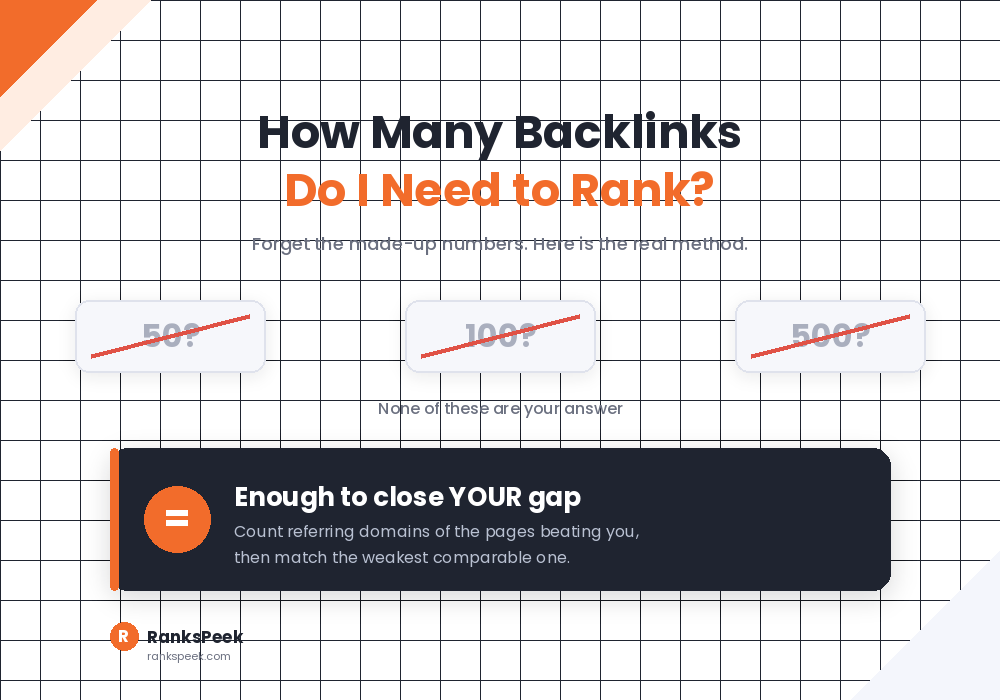
Every SEO guide gives you a number. Fifty for easy keywords. A hundred for hard ones. Those numbers come from nowhere. So how many backlinks do I need to rank, honestly? There is no universal figure, but there is a real method to find yours. This guide gives you that method: how to benchmark the pages already beating you, set two realistic targets, and know when links are not even your problem.
There is no fixed number. You need enough relevant referring domains to close the gap between your page and the weakest comparable page currently outranking you. Count referring domains, not raw backlinks, and compare only against pages of the same type. For many long-tail keywords, five to fifteen good referring domains is enough. For competitive terms, the gap is far larger.
Why a Universal Number Does Not Exist
Google ranks pages using many signals together. Links are one of them, and an important one, but content quality, search intent, page speed, and site trust all join the decision. So the same ten links can push one page to the top and do nothing for another.
Think about it practically. A long-tail question with weak competition might need almost nothing. Meanwhile, a commercial keyword owned by big brands might need dozens of strong referring domains plus far more. Consequently, the useful question changes. Instead of asking how many backlinks do I need to rank in general, ask how many you need to beat the specific pages sitting above you right now.
Count Referring Domains, Not Backlinks
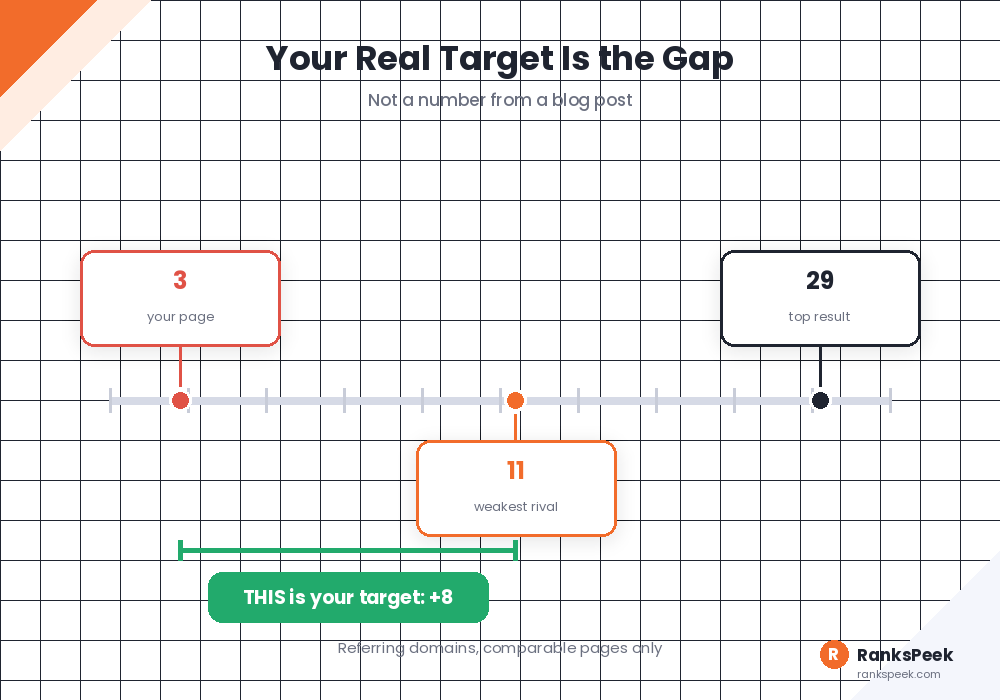
This single shift fixes most bad link planning. A backlink is any single link. A referring domain is a unique website linking to you. Those are very different things.
Picture applause. One person clapping a hundred times is still one person who liked your work. Ten different people clapping once each is ten separate endorsements. Google reads links the same way, so ten links from one blog carry far less weight than ten links from ten trusted sites. Therefore, always plan around referring domains. Check yours anytime with our free Backlink Checker, and compare authority with the DA PA DR Checker.
How Many Backlinks Do I Need to Rank? Find Your Number
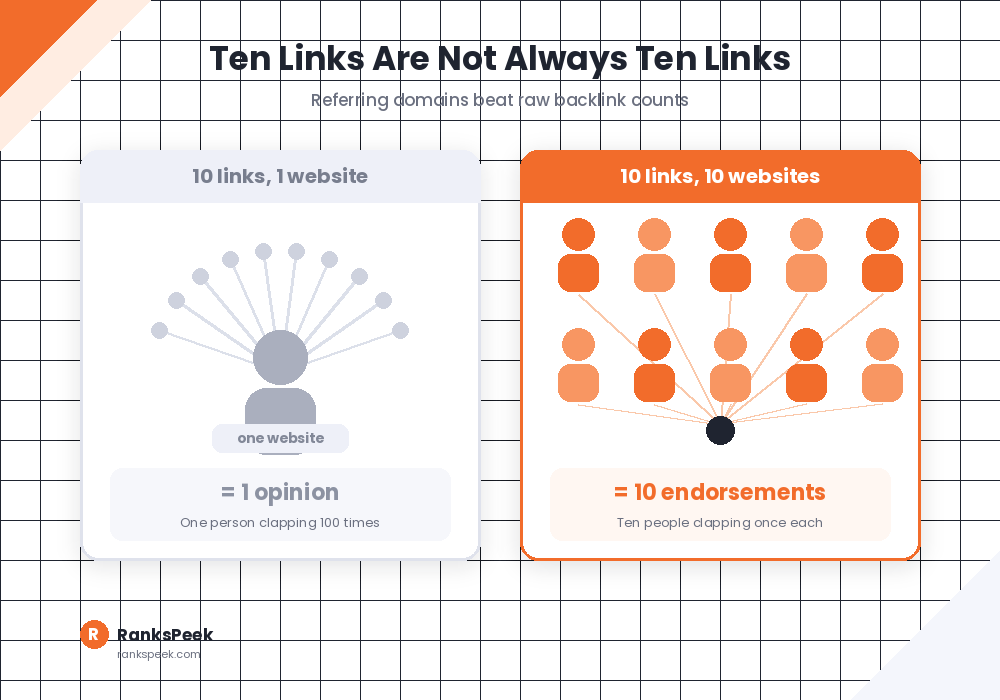
Here is the method, step by step. Step one, pick one keyword and one page. Do not calculate a number for your whole site, because every page competes separately.
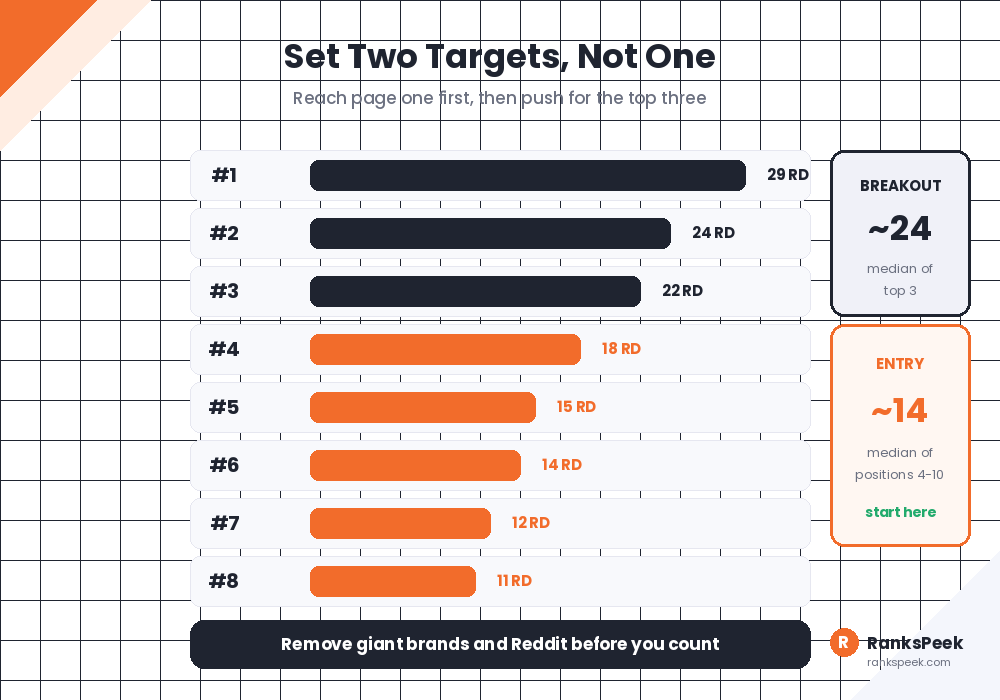
Step two, open the top ten results for that keyword. Step three, remove the outliers. Ignore giant brands, Wikipedia, Reddit, and homepages if your page is an article. You cannot copy their advantages, so comparing yourself to them only wastes budget.
Step four, record the page-level referring domains for each comparable result. Step five, set two targets. Your entry target is the median of positions four to ten. Your breakout target is the median of positions one to three. Get on page one first, then decide whether the top three is worth the extra push.
Step six, adjust for reality. Aim higher if your site is newer or your page is thinner. Aim lower if you already have topical authority, better content, or strong internal links pointing at that page. Step seven, build a first batch, then watch. If rankings move, keep going. If nothing moves, your bottleneck is probably not links at all.
Three Examples of the Method
A long-tail guide: after removing outliers, comparable page-one results show 4, 6, 7, 9, and 11 referring domains, while your page has one. Your entry target sits around six or seven, and your breakout target sits near ten. A first batch of five to eight relevant domains is a fair test.
A local service page: comparable results show 3, 5, 6, 8, and 10 referring domains. Local links matter here, so five to eight relevant local or industry domains, plus reviews and a complete Google Business Profile, makes a realistic first milestone.
A competitive money page: comparable results show 40 to over 100 referring domains. In this case, links alone will not fix it, especially on a young site. You need site-wide authority, brand recognition, and a page that genuinely matches intent before more links change anything.
When You Need Fewer Backlinks
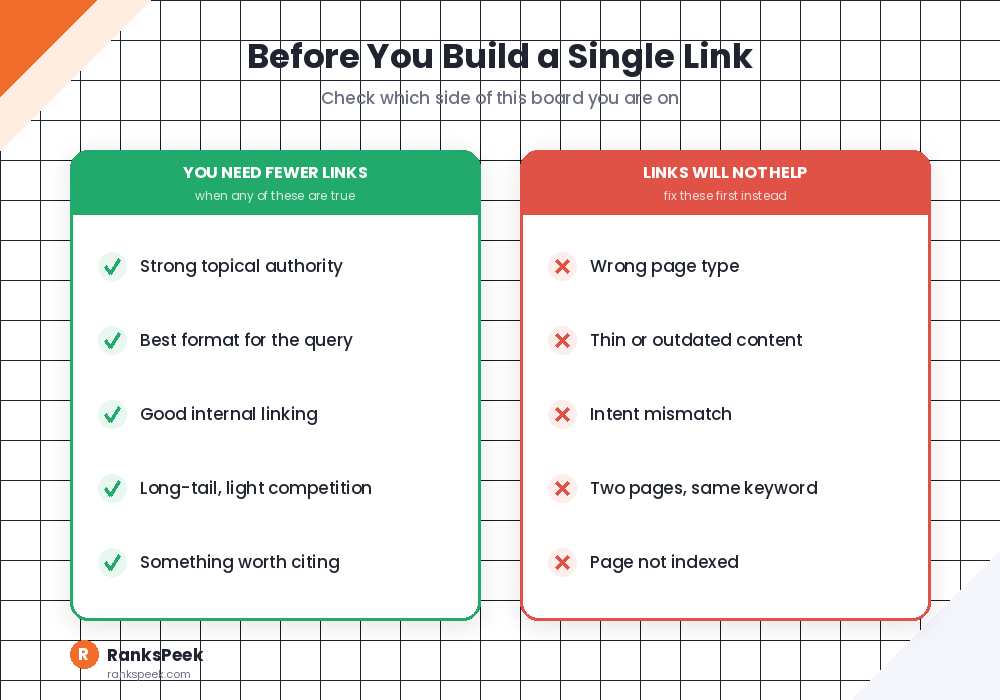
Some pages rank on very few links, and the pattern is consistent. You need fewer when your site already holds topical authority in that area, when your page is clearly the best format for the query, or when your internal links route real authority to it. Additionally, long-tail keywords with light competition often need almost none.
The strongest shortcut is publishing something worth citing. Original data, a genuinely useful tool, a template, or an answer nobody else gives will attract links by itself. That is why our own free tools exist, and why our guide on the 80 20 rule of SEO pushes you toward fewer, better assets instead of endless thin pages.
When More Backlinks Will Not Save You
This blind spot burns budgets. More links will not help when your page is the wrong type for the query, when your content is thin or outdated, or when two of your pages compete for the same keyword. Similarly, links cannot fix a page that Google never indexed, so check that first with our guide on why a website is not showing up on Google.
Quality also decides whether links help or hurt. Bought links, mass directory submissions, and automated placements are link spam under Google’s spam policies, and they can sink a site instead of lifting it. If your profile already carries junk, our guide on how to reduce spam score walks through the cleanup, and our Trust Flow Citation Flow Checker shows whether your links carry real trust.
What Changed in 2026
Links now do double duty. Beyond classic rankings, AI answer engines lean on recognizable, well-cited sources when choosing what to quote. Consequently, a diverse profile of genuine referring domains helps you appear in AI answers, not just blue links. The work is the same, but the payoff got wider.
Additionally, spam detection keeps sharpening. Purchased link packages lose value faster than before, so the gap between earned and bought links widens every year. Meanwhile, internal linking quietly grew in importance, because it routes the authority you already have to the pages that need it. In short, quality and structure now beat volume more decisively than ever.
Frequently Asked Questions
How many backlinks do I need to rank on page one?
Enough to match the comparable pages already there. Check the referring domains of results in positions four to ten, ignore giant brands, and use their median as your entry target. For light competition, five to fifteen relevant domains often works.
Can a page rank with zero backlinks?
Yes, and it happens often. Long-tail queries, strong topical authority, good internal linking, and a page that nails intent can rank without direct links. However, competition raises the bar quickly, and link gaps then become visible.
How many backlinks per month are safe?
There is no safe quota. What matters is whether links are editorially earned and relevant. A burst of genuine press coverage is fine, while a steady drip of paid or automated links is risky regardless of speed.
Are ten links from one site as good as ten from ten sites?
No, and the difference is large. Ten different referring domains represent ten independent endorsements, while ten links from one site remain a single opinion. Always prioritize new domains over repeat links.
How do I check my competitors’ backlinks for free?
Paste any URL into our free Backlink Checker to see its link profile, then compare authority with the DA PA DR Checker. Run the top five results for your keyword and your target becomes obvious.
So the real answer to how many backlinks do I need to rank is: as many as it takes to close your specific gap, and not one link more. Measure that gap with our free Backlink Checker, then explore all 17 free tools on RanksPeek to build links that actually count.
The RanksPeek Team builds free SEO tools that help website owners check authority, backlinks, keywords, speed and more, with no signup needed. Explore all 17 free tools →